


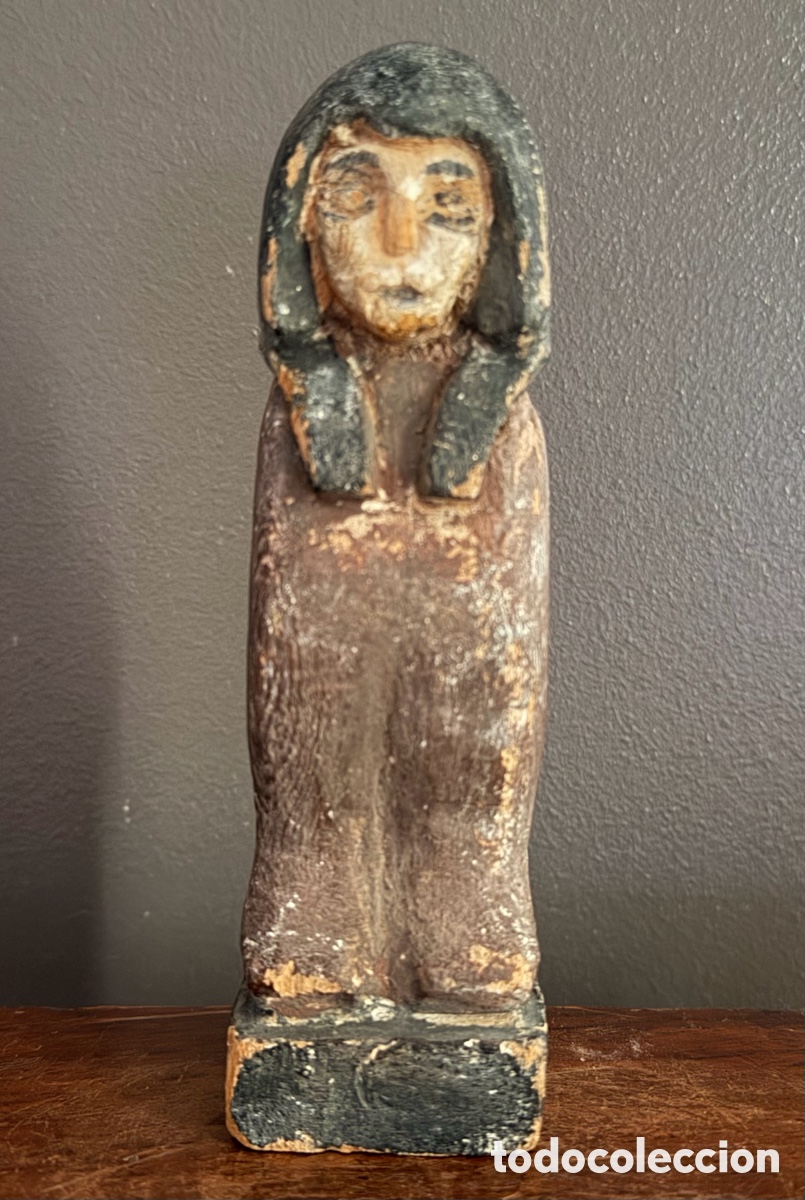
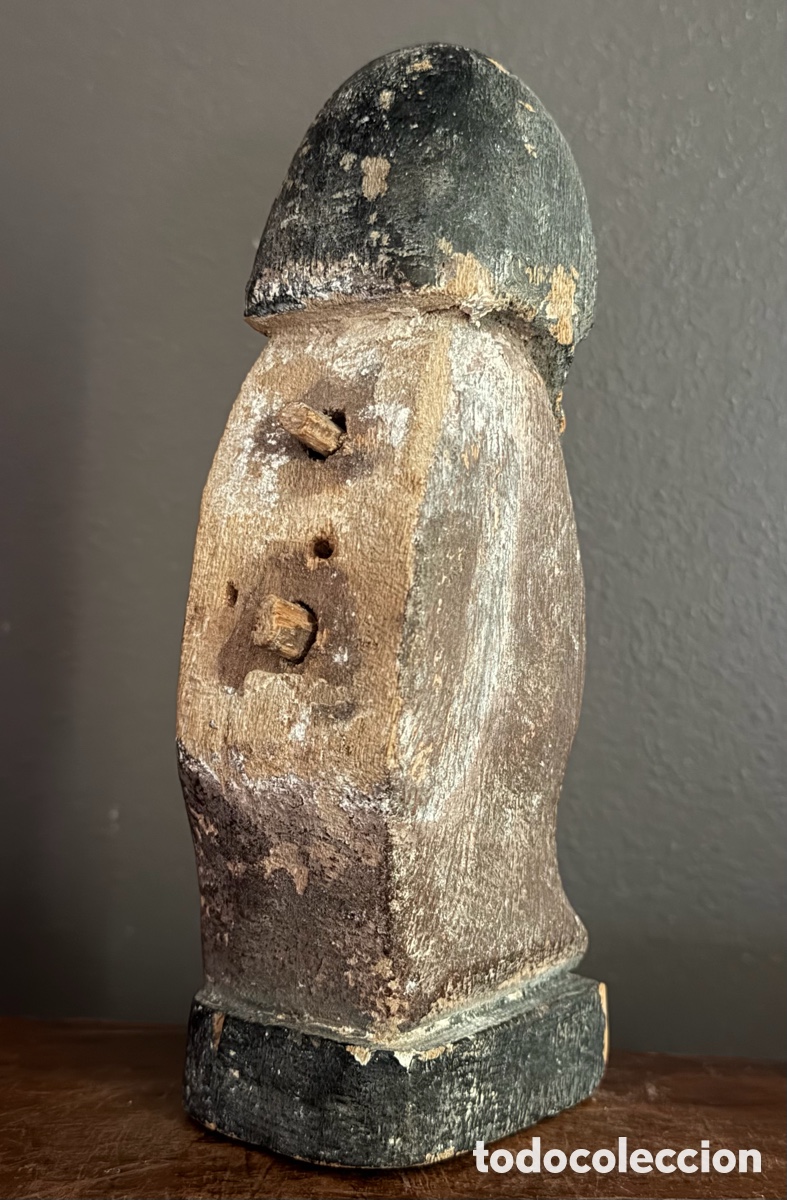
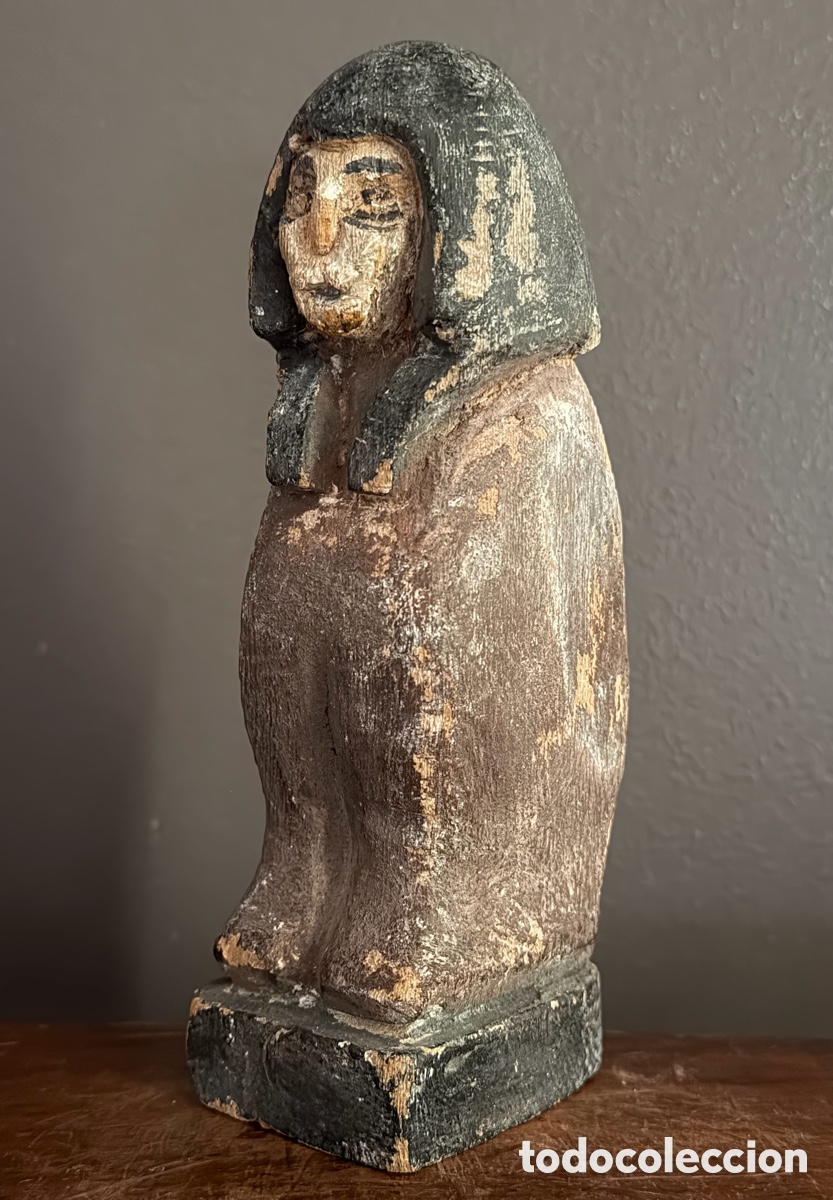
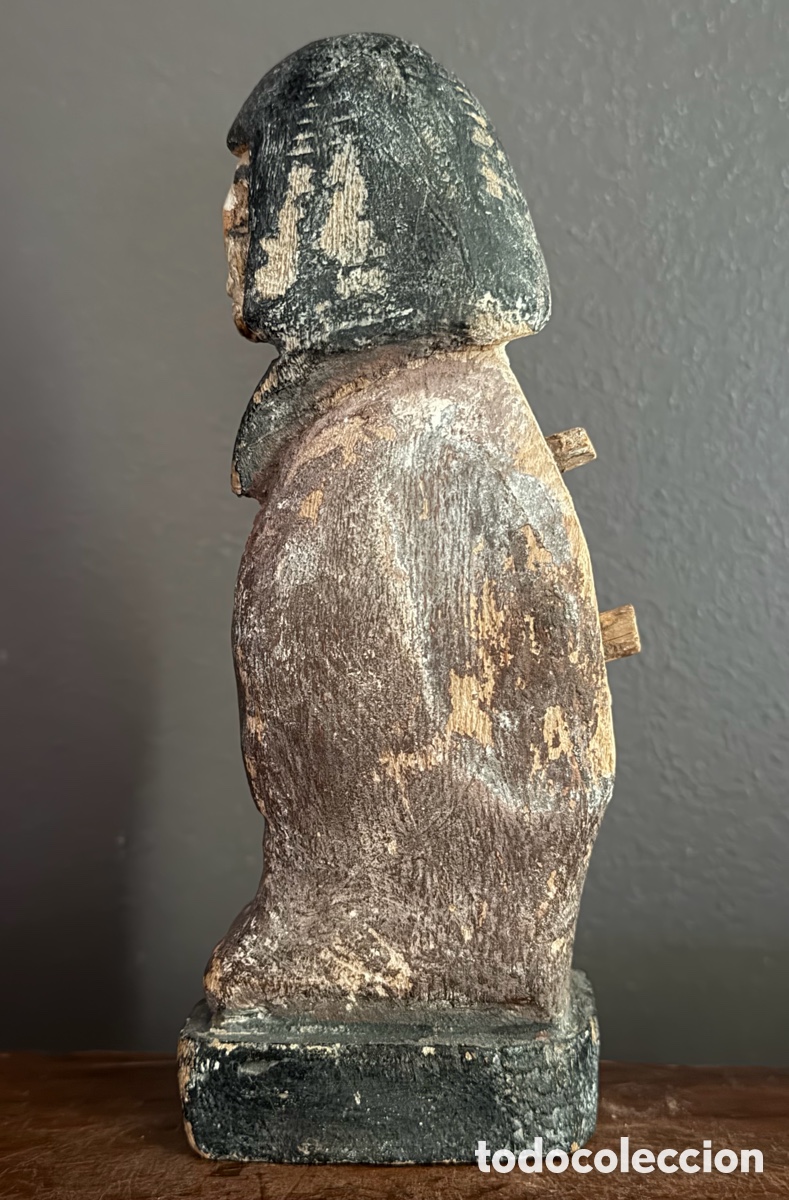
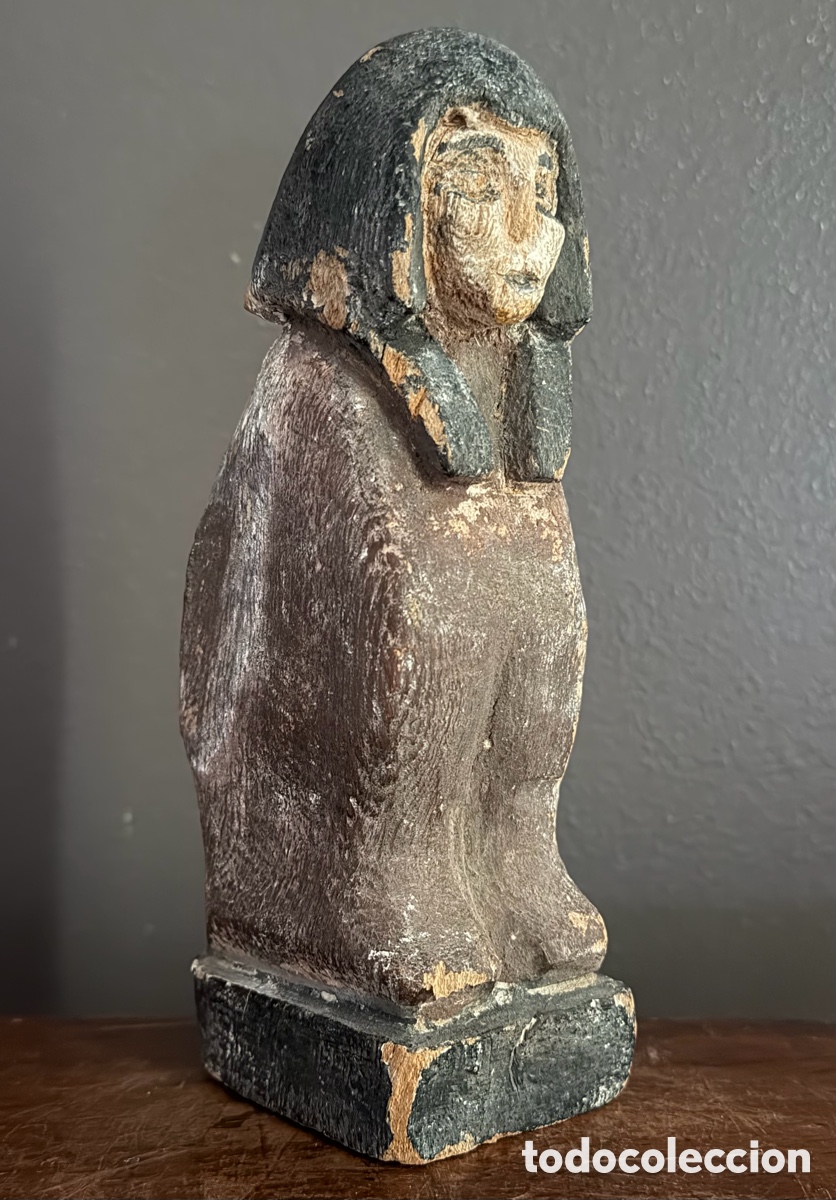
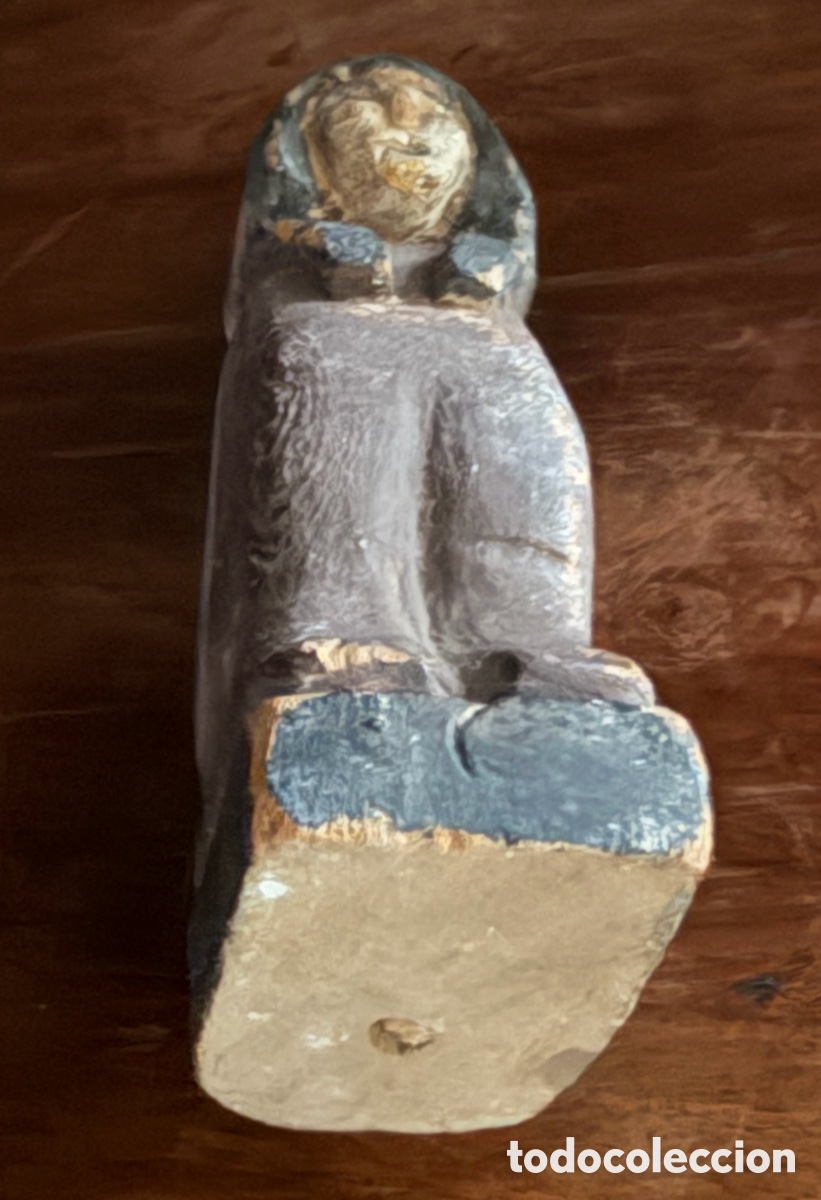
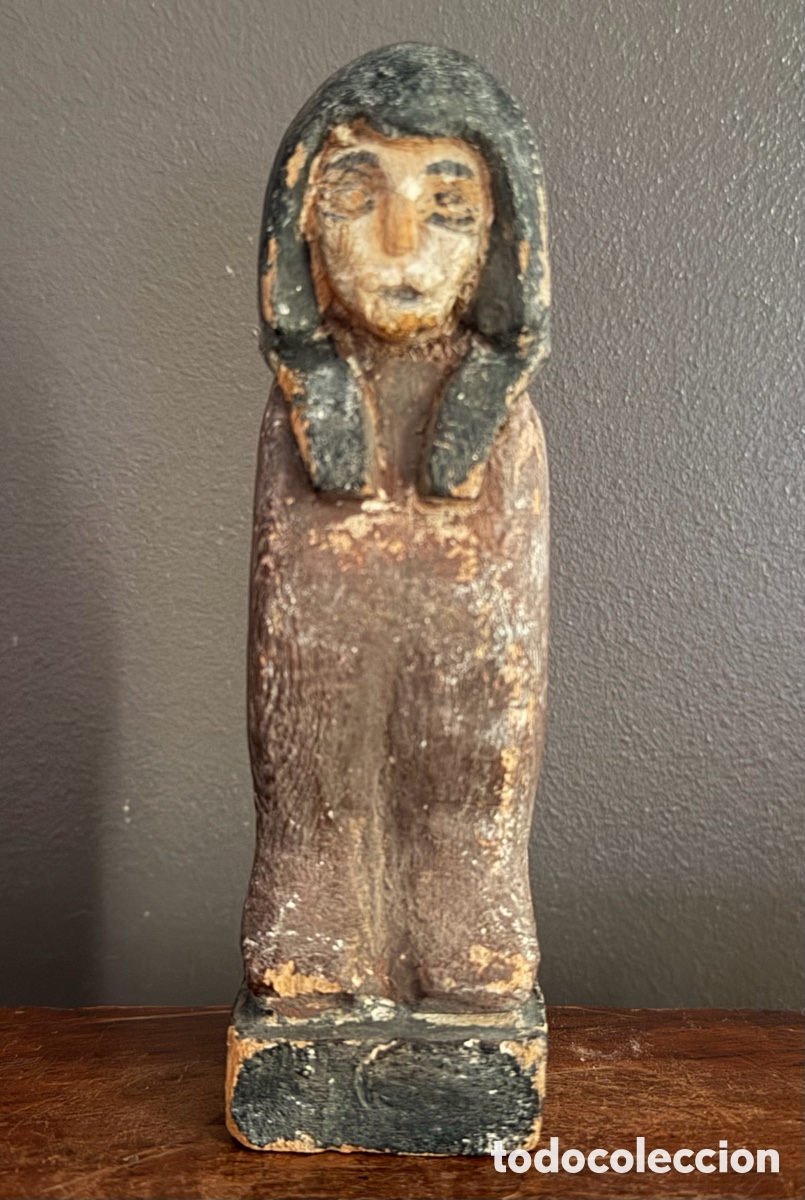
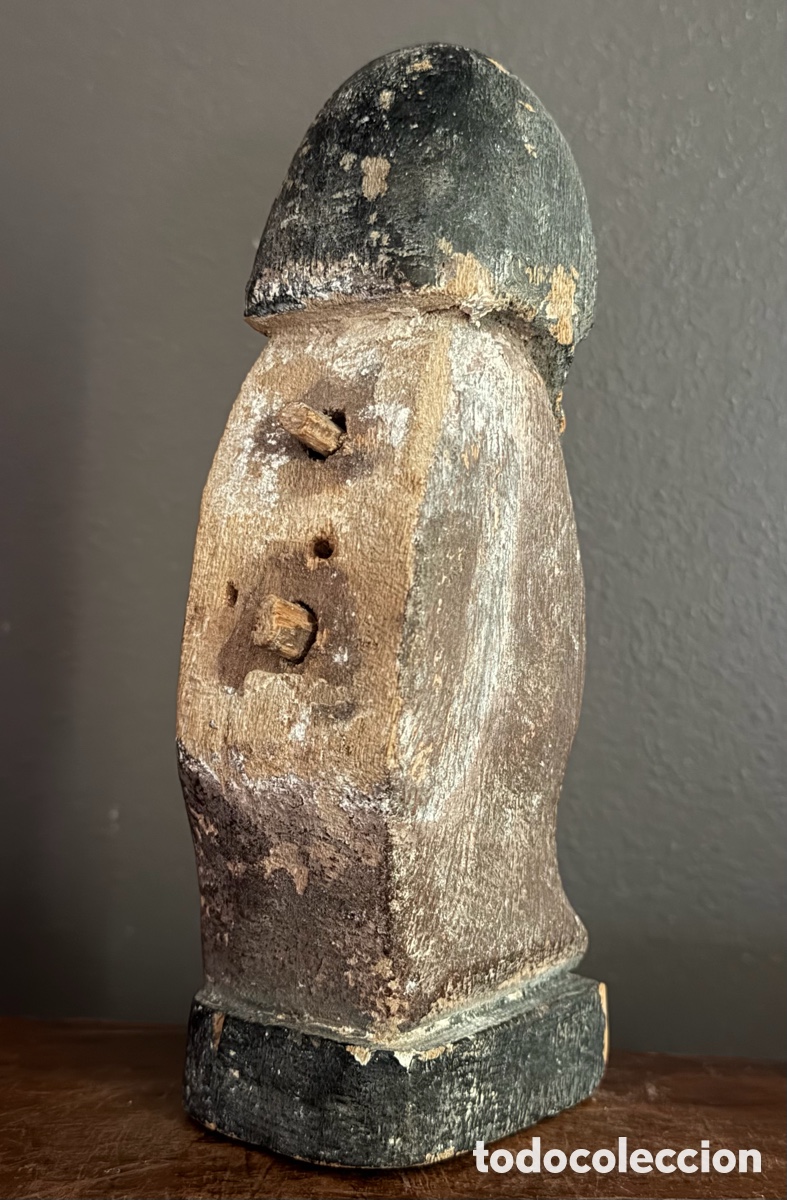
Estatuilla de Ba
Medium: madera estucada y policromada
Medidas; 17 cm. de alto
Peso: 123 gramos
Colección Privada
En la religión egipcia, el Ba conformaba una de las partes fundamentales del espíritu humano junto con el Ka el Aj, para los egipcios simbolizaba la manifestación de la fuerza vital y la personalidad única de un individuo.
Se representaba con cuerpo de ave (generalmente un halcón) y cabeza humana.
La forma de pájaro expresaba la increíble movilidad que ganaba el espíritu tras el fallecimiento.
A diferencia del Ka, que debía permanecer cerca de la tumba, el Ba poseía la libertad de salir volando del sepulcro durante el día para recorrer el mundo de los vivos e interactuar con el entorno terrenal. Al caer la noche, debía retornar al cuerpo momificado para reunirse con sus raíces esenciales.
Esta estatuilla de madera pintada o estucada se colocaba en las tumbas, a menudo decorando las esquinas de los sarcófagos, la parte superior de santuarios o integradas en estelas funerarias. La pieza conserva los rasgos distintivos tradicionales, la peluca oscura que enmarca la cara humana y las garras reposando firmemente sobre una base rectangular.
Ba Statuette
Medium: Stuccoed and polychromed wood
Dimensions: 17 cm high
Weight: 123 grams
Private Collection
In Egyptian religion, the *Ba* constituted one of the fundamental parts of the human spirit—alongside the *Ka* and the *Akh*—symbolizing the manifestation of an individual's vital force and unique personality.
It was depicted with the body of a bird (usually a falcon) and a human head.
The bird form expressed the incredible mobility the spirit gained after death.
Unlike the *Ka*, which had to remain near the tomb, the *Ba* was free to fly out of the sepulcher during the day to traverse the world of the living and interact with the earthly realm. At nightfall, it had to return to the mummified body to reunite with its essential roots.
This painted or stuccoed wooden statuette was placed in tombs—often adorning the corners of sarcophagi or the tops of shrines, or integrated into funerary stelae. The piece retains traditional distinctive features: the dark wig framing the human face and the talons resting firmly on a rectangular base.

Spagna (Málaga)


 Español
 English
 Deutsch
 Français
 Português
 Italiano