


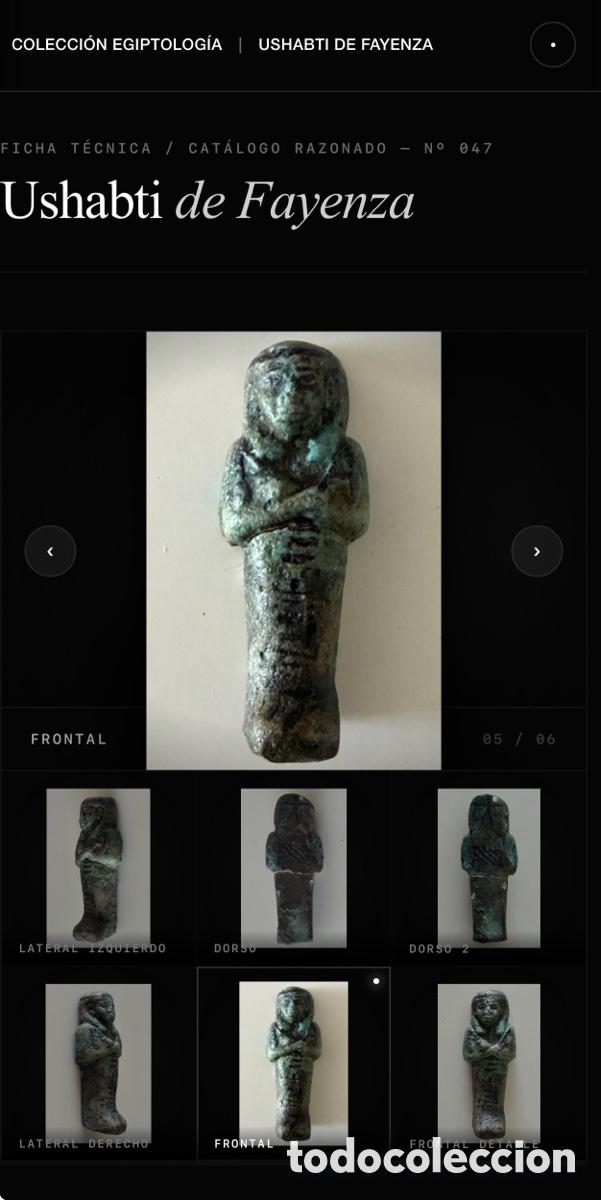
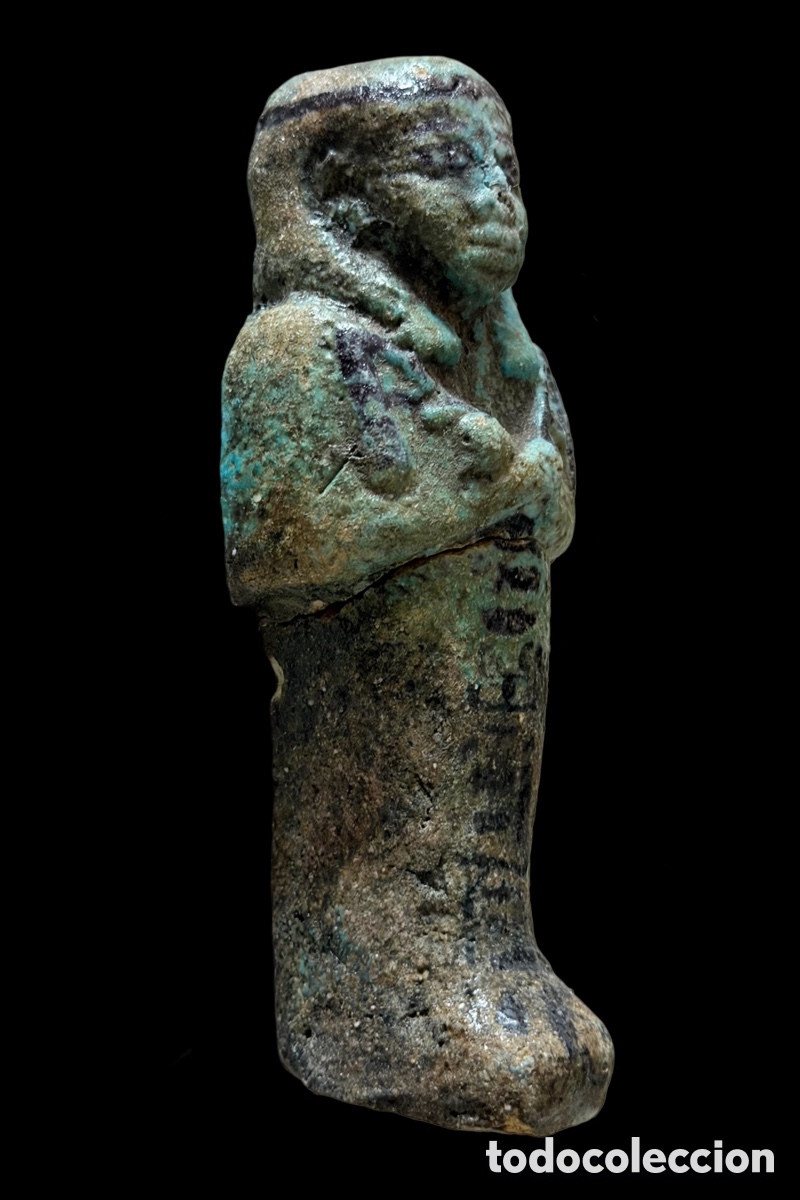
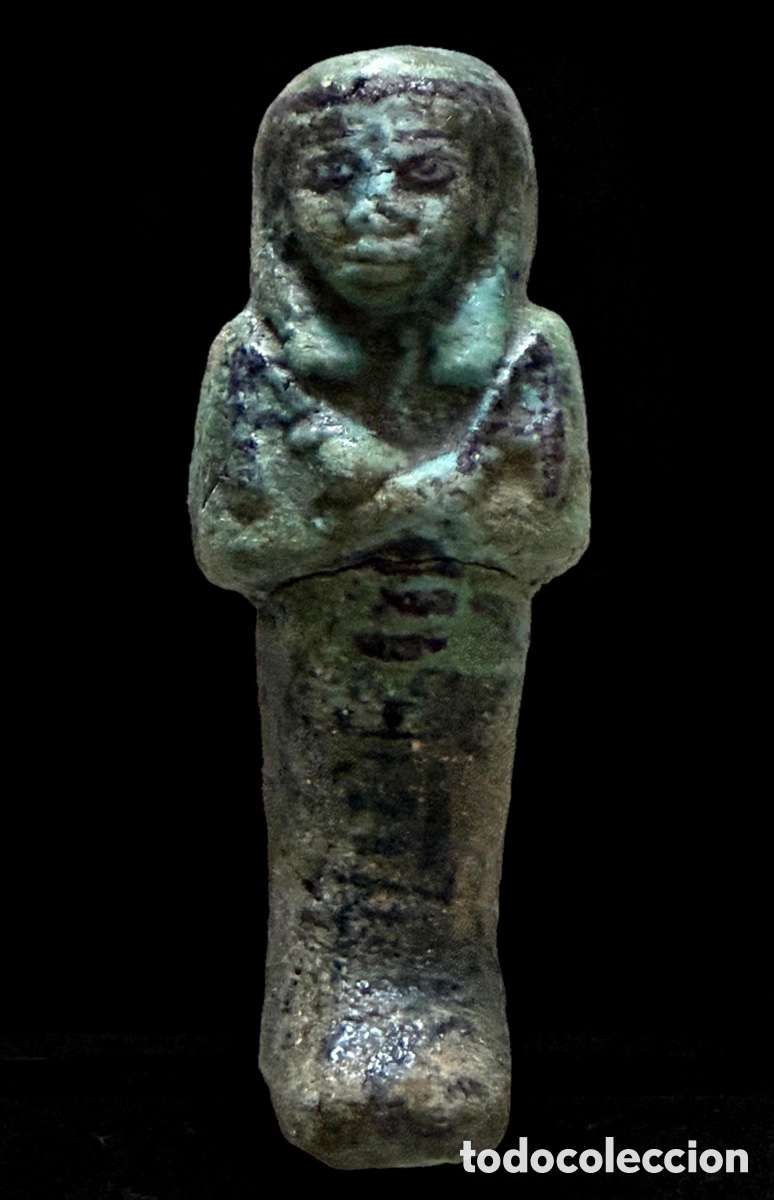
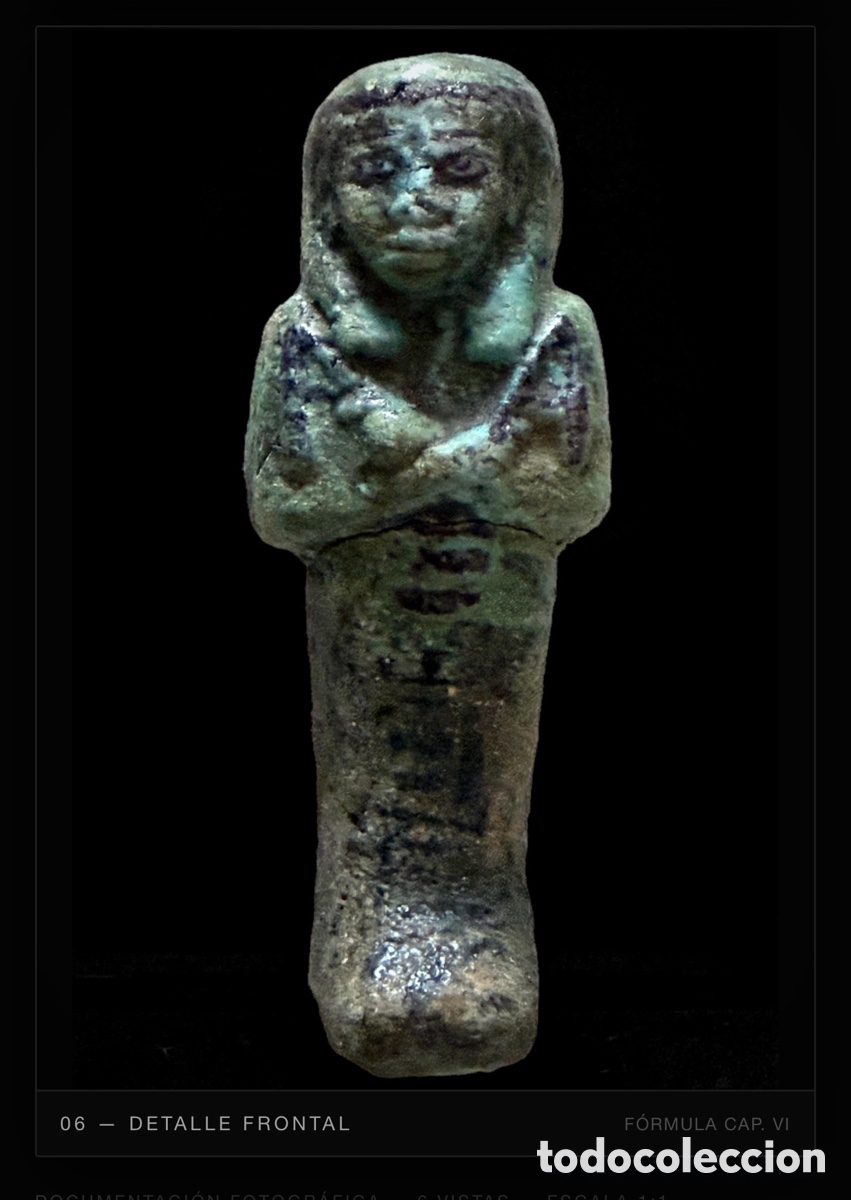
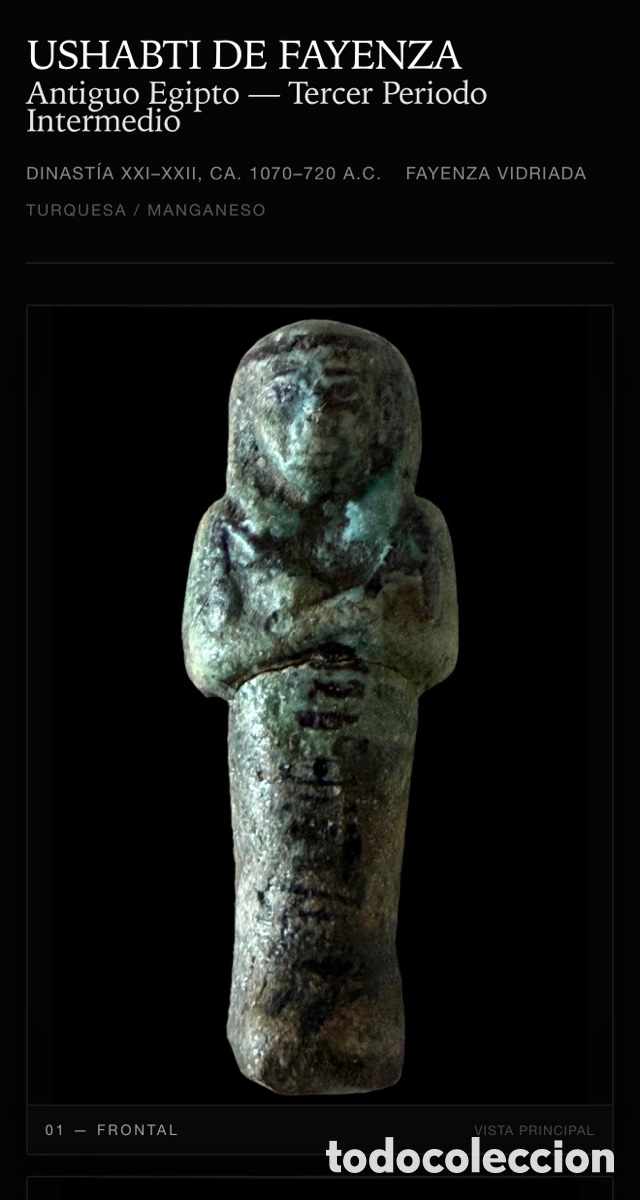
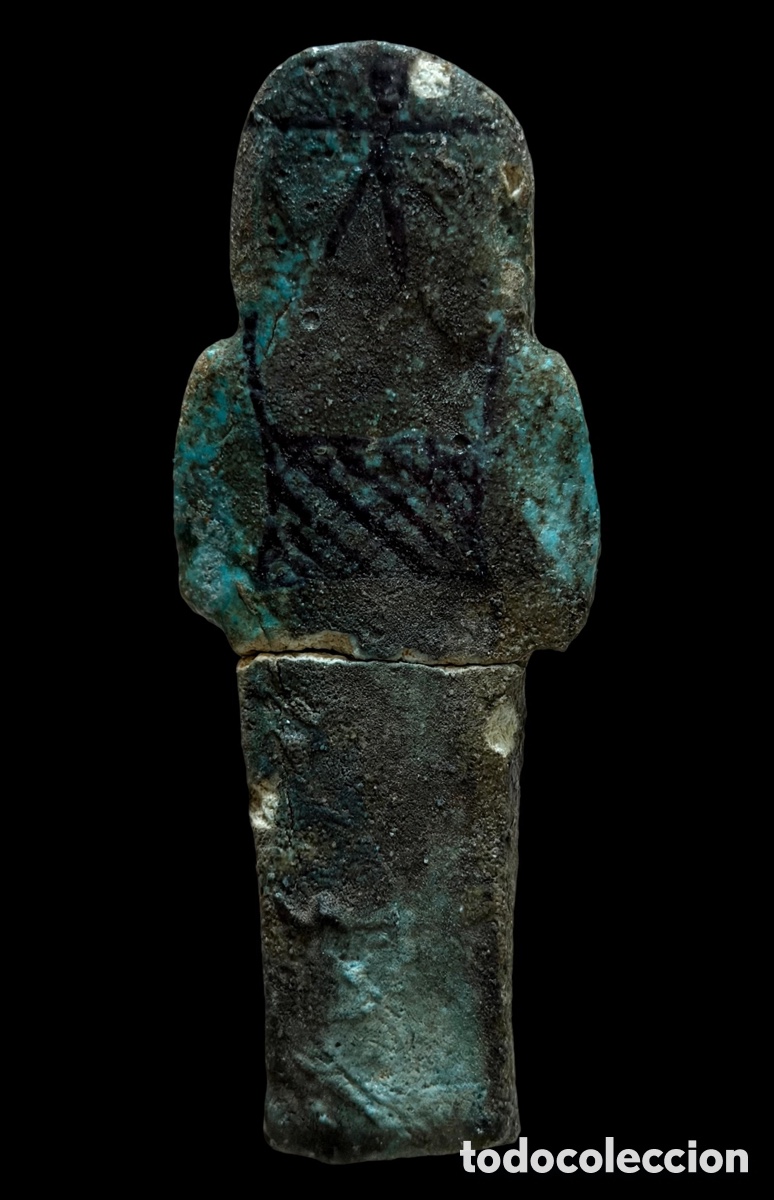
Figura ushabti de color azul cobalto
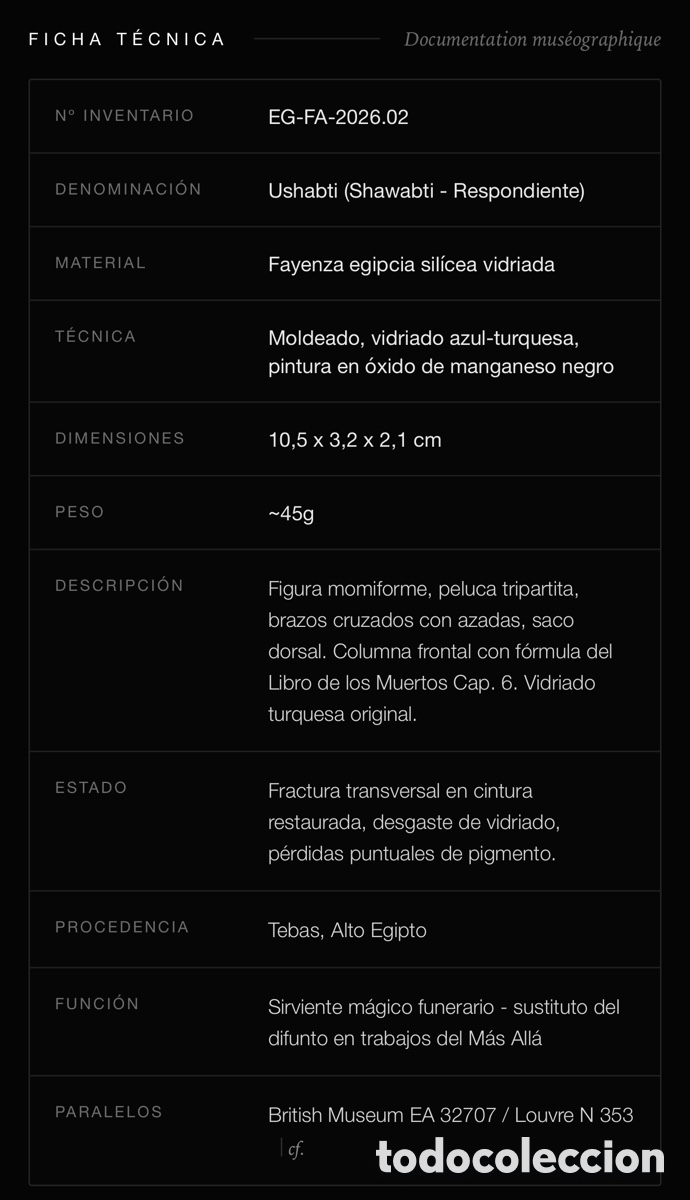
Material: Fayenza de color azul cobalto
Dimensiones:
12 cm de altura
4,5 cm de longitud
3 cm de anchura
Peso: 130 gramos
Colección privada
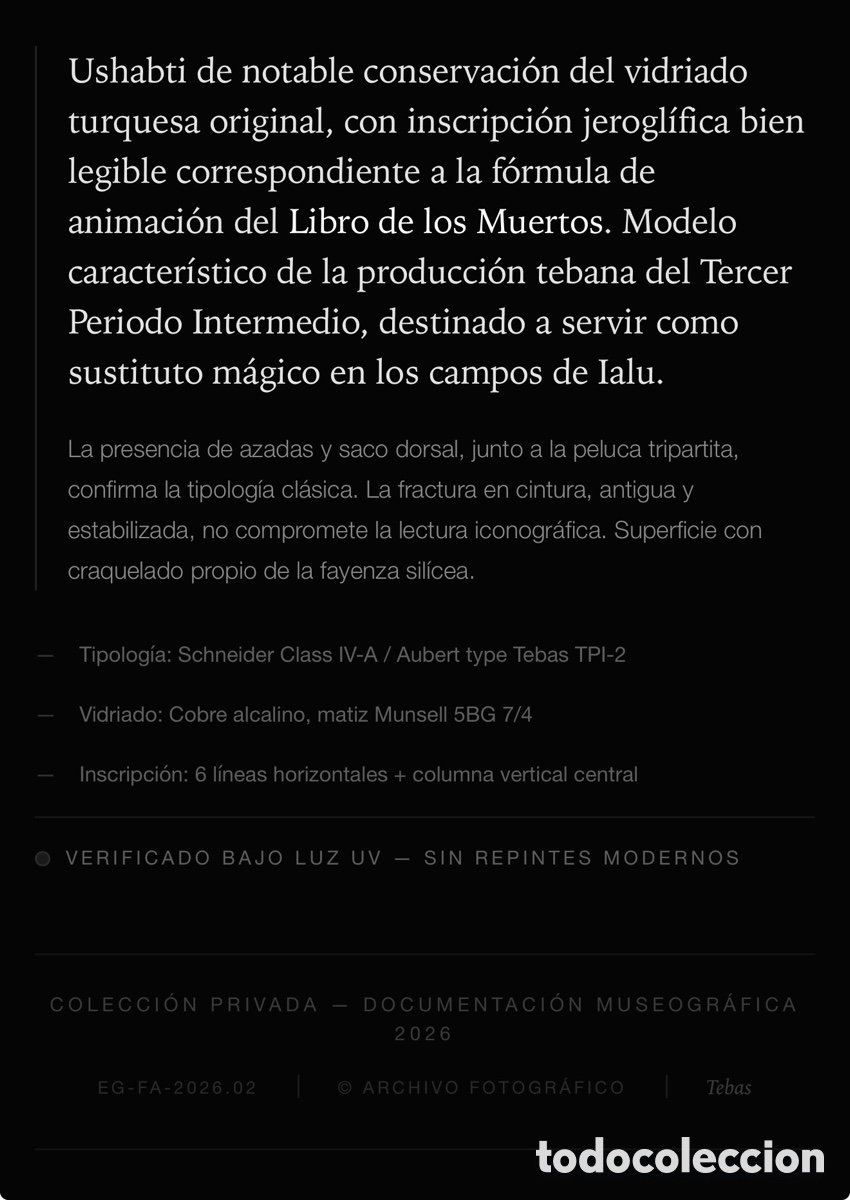
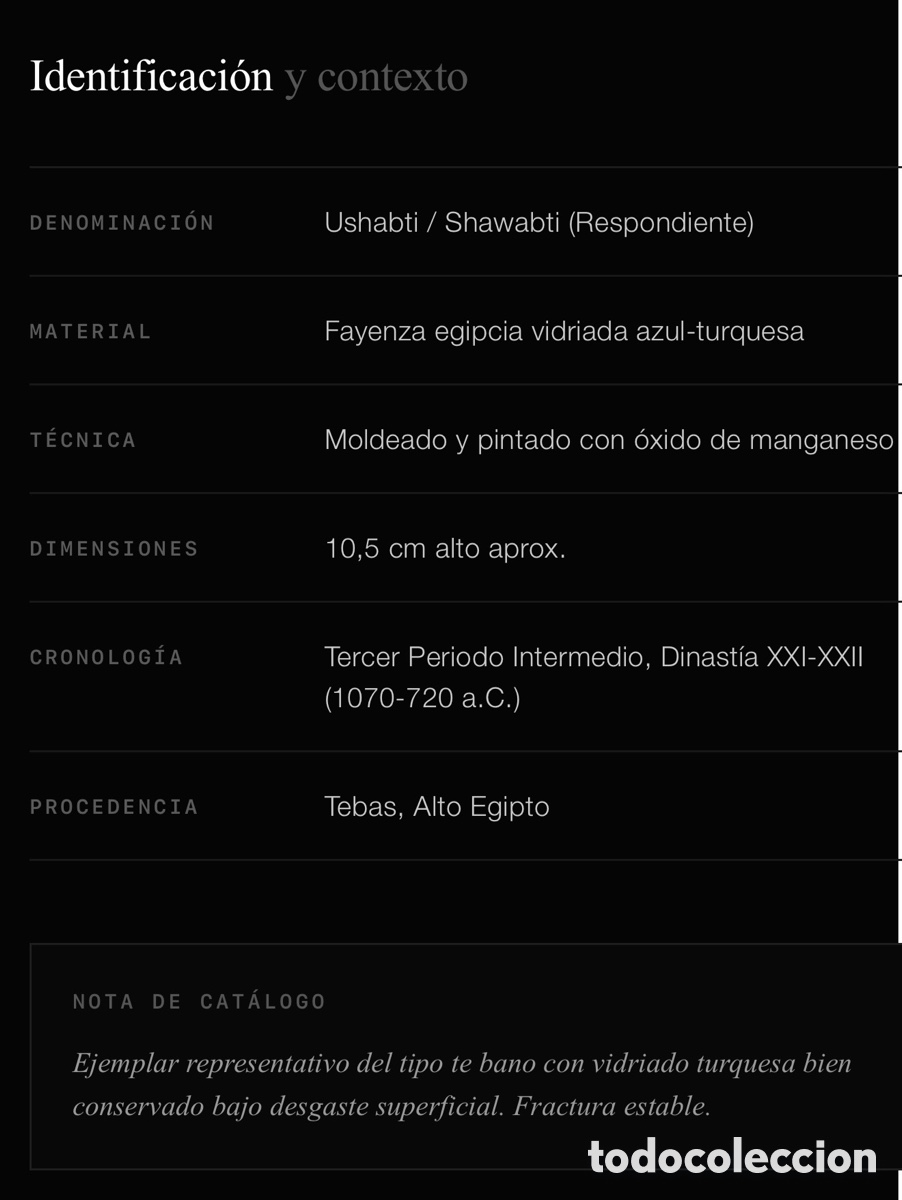
Ushabti de fayenza vidriada azul-turquesa
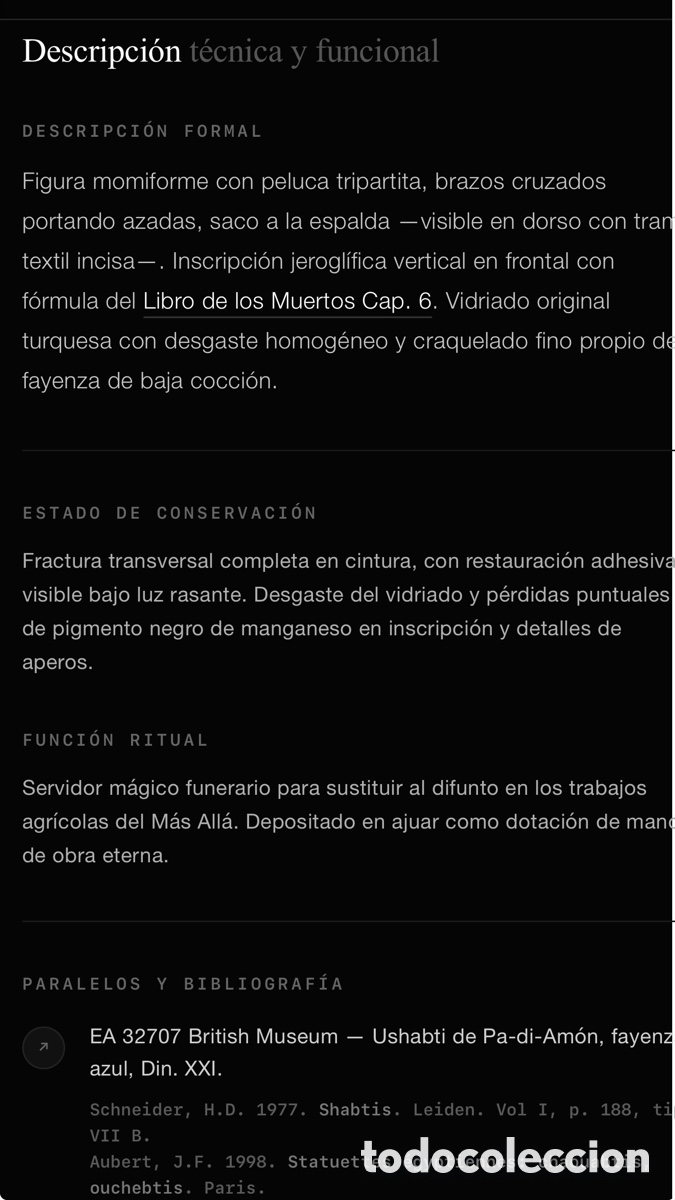
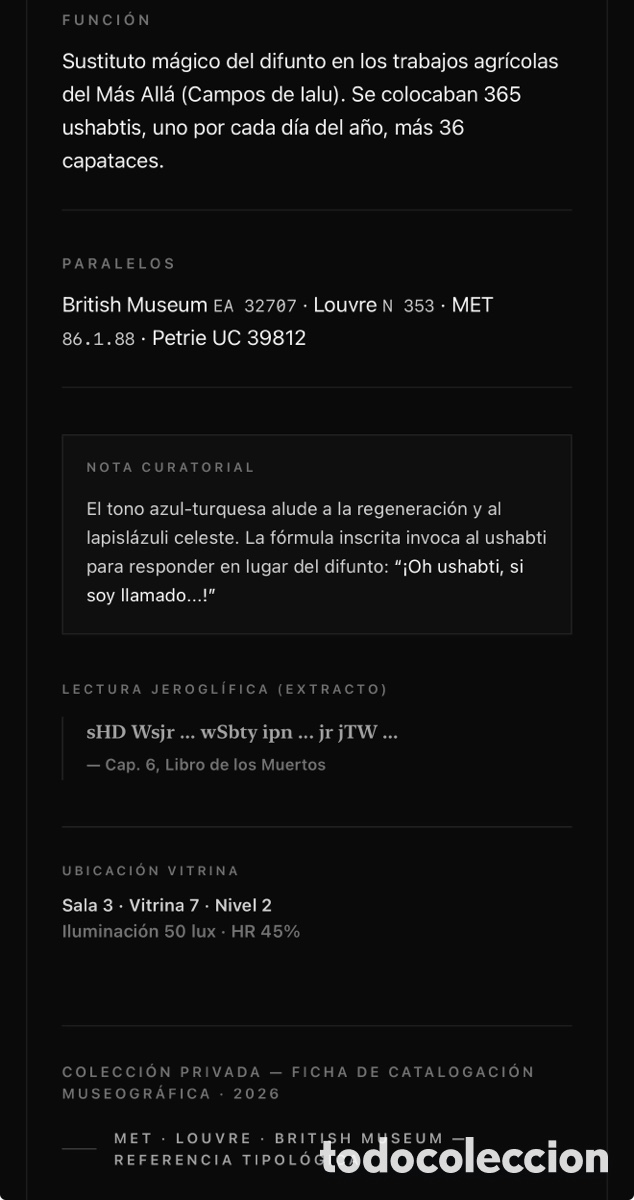
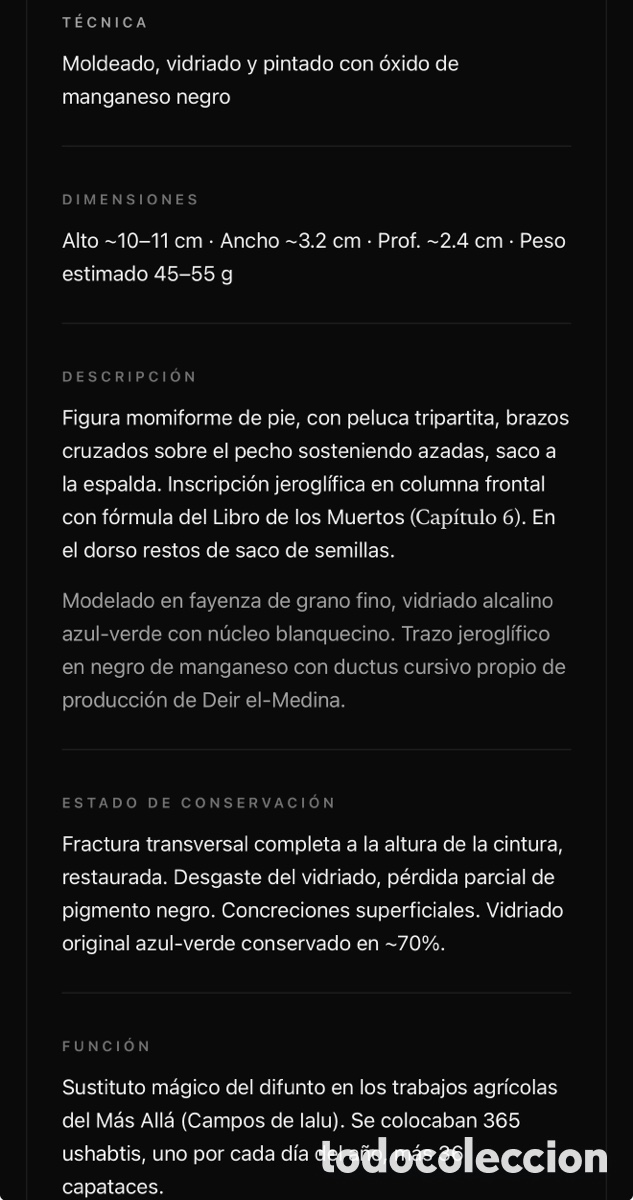
• Típico del Imperio Nuevo (1300-1000 a.C.) — se distingue por el vidriado azul verdoso, los detalles en tinta negra de manganeso y la columna de jeroglíficos frontal (Fórmula del Capítulo 6 del Libro de los Muertos: "Oh ushabti, si soy llamado a trabajar...")
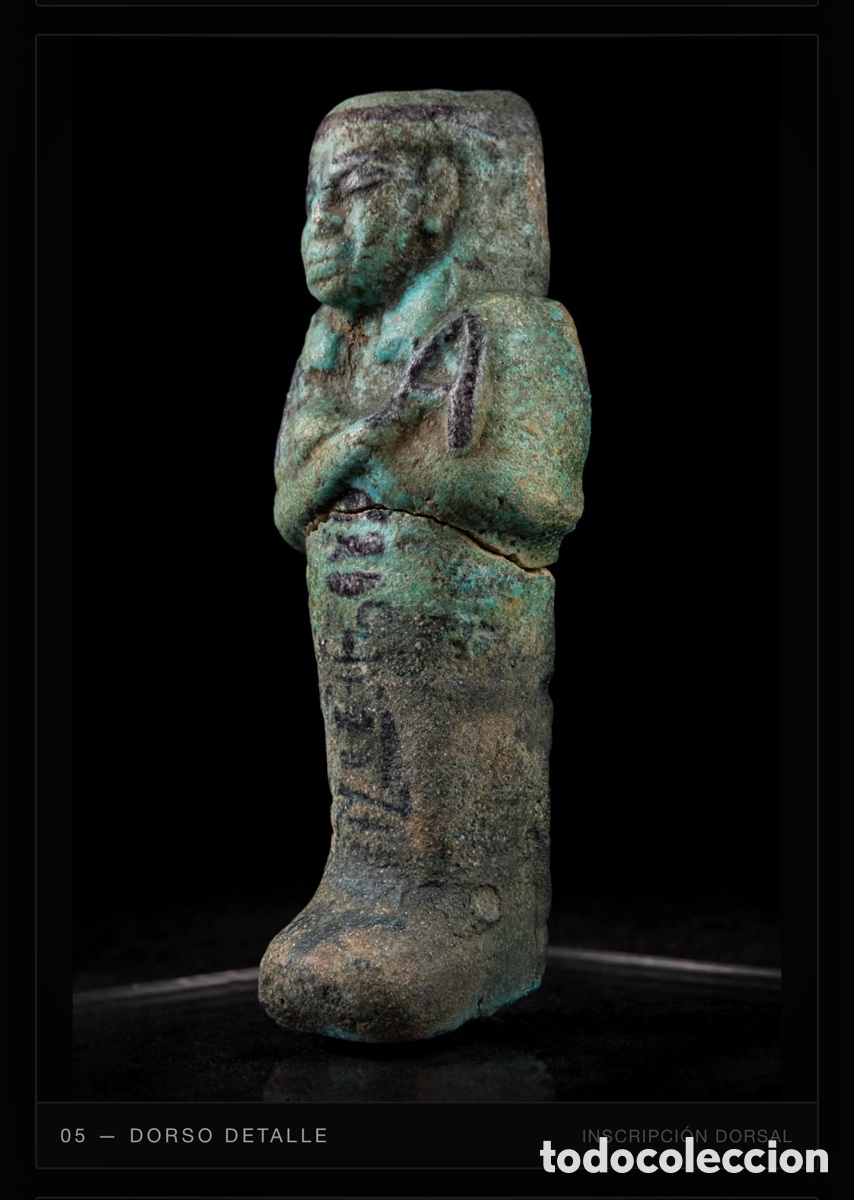
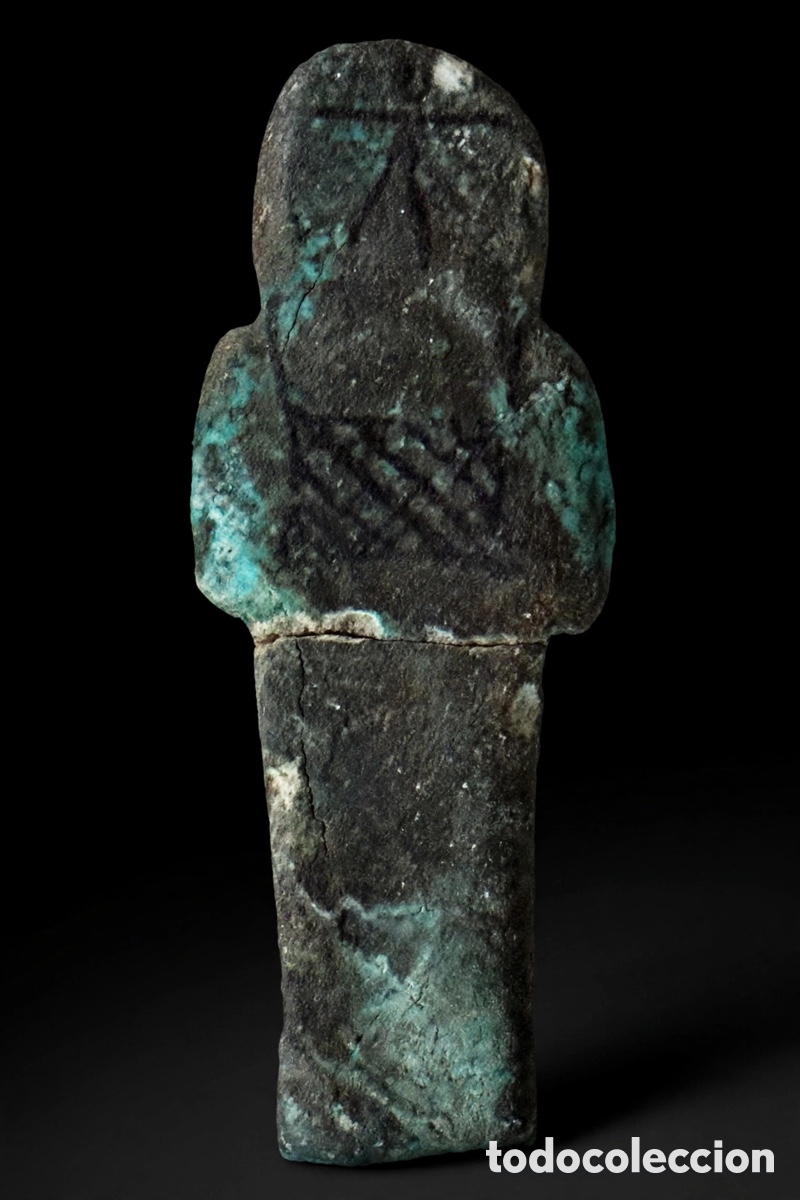
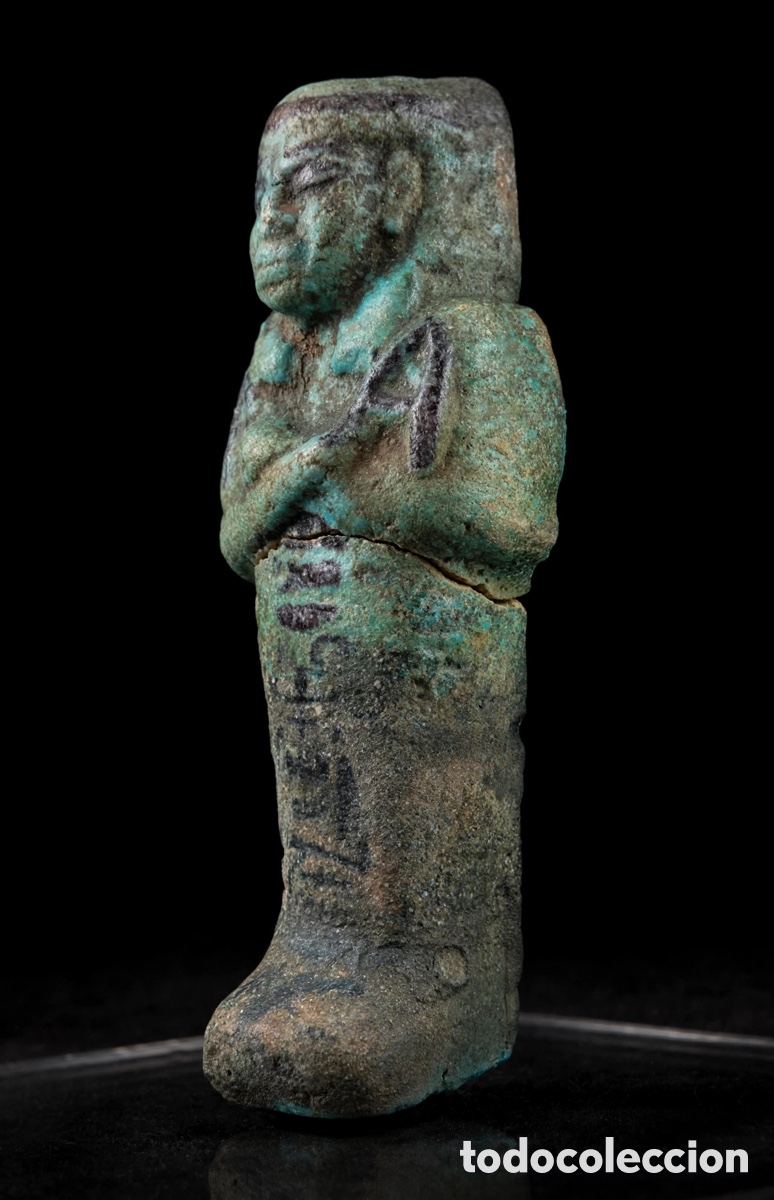
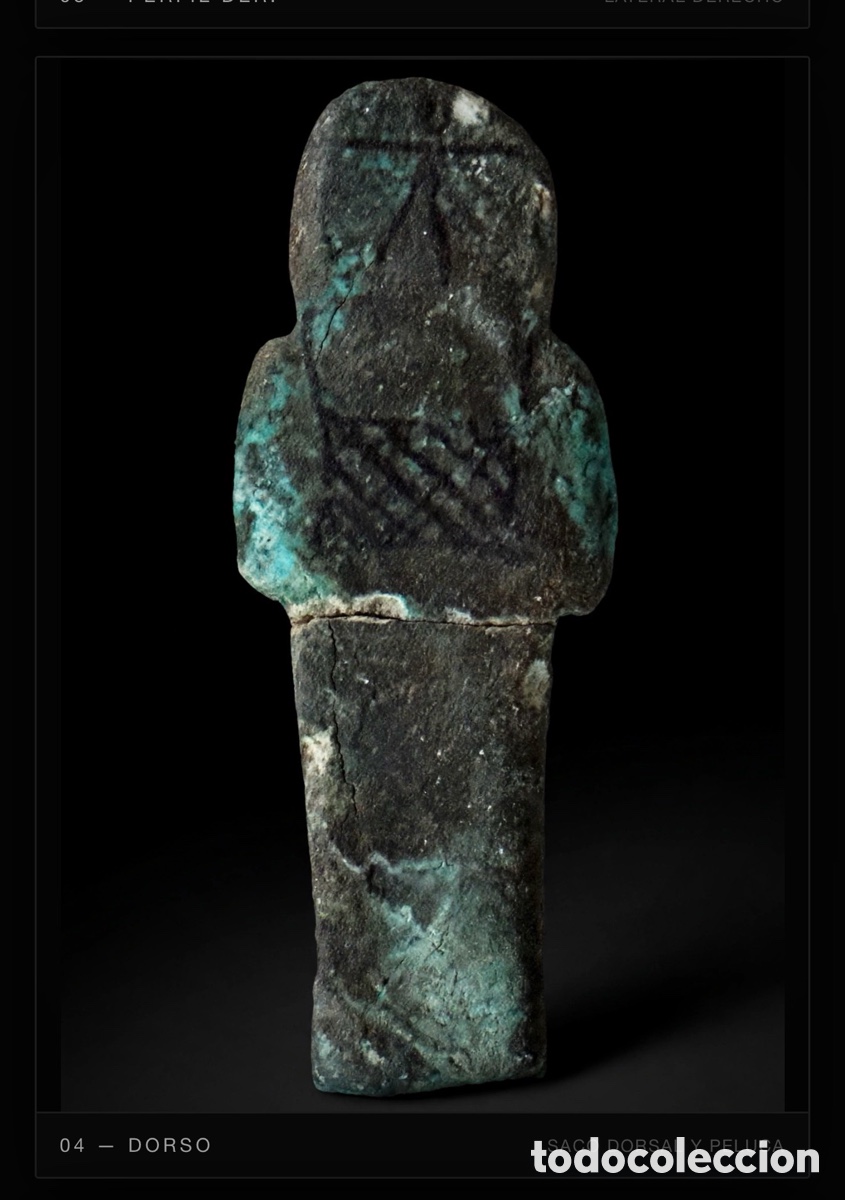
• Detalles visibles en tus fotos: brazos cruzados con azadas, saco dorsal pintado en la espalda, peluca tripartita, fractura antigua en la cintura ya restaurada.
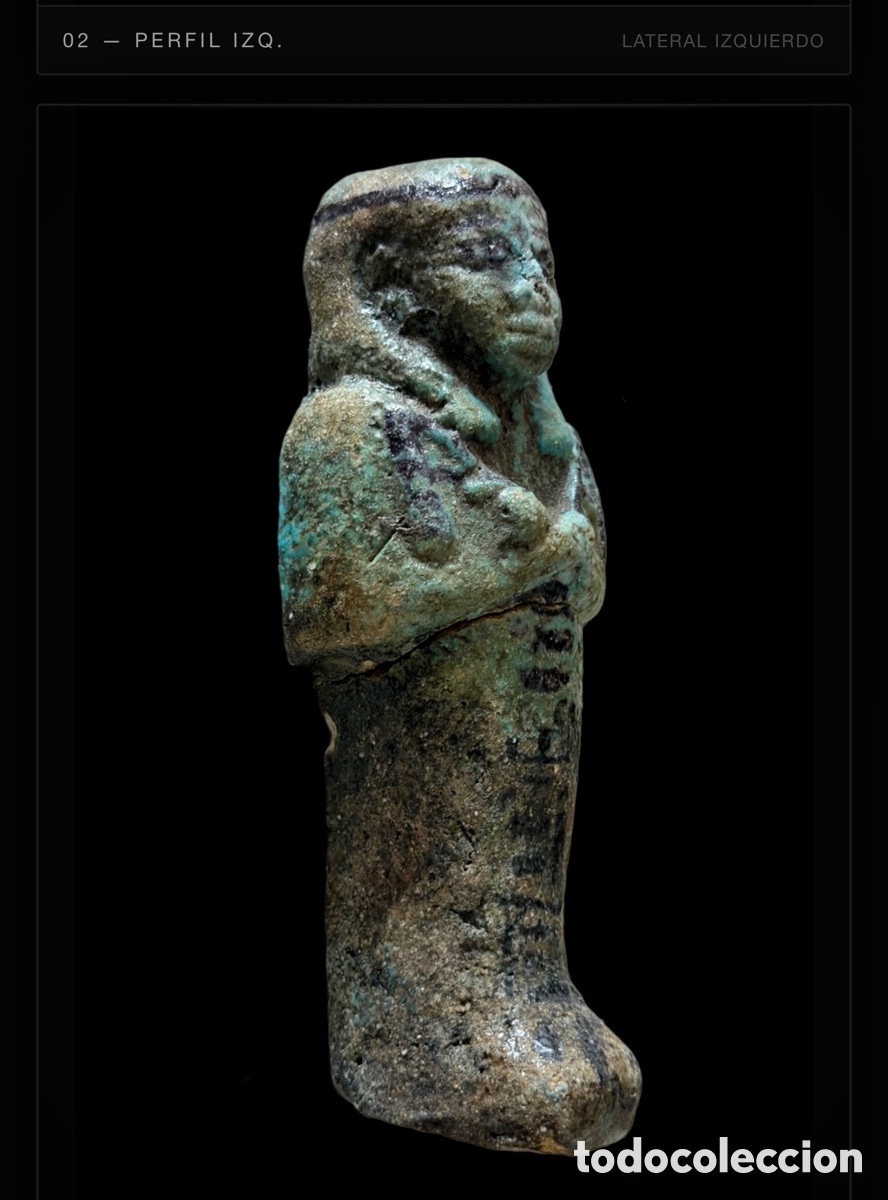
• La ficha incluye las 3 vistas: frontal, trasera con el saco, y perfil
• Datación precisa basada en su forma: Tercer Periodo Intermedio, dinastías XXI-XXII (1070–720 a. C.)
• Estado de conservación: Presenta una antigua rotura a la altura de la cintura que ha sido reparada; este detalle es claramente visible en las fotografías tomadas desde una perspectiva lateral.
Para protegerse del agotamiento en la eternidad, los faraones y la alta nobleza idearon un plan ingenioso: llevar consigo al más allá todo un ejército de pequeñas figuras de arcilla con vidriado azul, conocidas como «ushabtis».
Durante la dinastía XXI, esta práctica se tomó tan en serio que no solo se fabricaban 365 figuras —una para cada día del año—, sino que también iban acompañadas de 36 capataces encargados de supervisar a la «tropa».
Estas figuras, representadas con vestimenta civil y sosteniendo un látigo sobre el pecho (como el ejemplar que aquí se muestra en detalle), no estaban destinadas al trabajo manual en el campo; su función era, más bien, ejercer el mando y la autoridad dentro del plano espiritual.
Más allá de esta jerarquía, es el radiante tono azul cobalto lo que cautiva constantemente a los arqueólogos. En una época en la que el lapislázuli natural era un lujo casi inalcanzable, los artesanos egipcios lograron crear su propio color místico mediante la cocción de cobre a temperaturas cercanas a los 1000 °C. En su cosmovisión, este tono era mucho más que un simple elemento decorativo: simbolizaba las aguas primordiales del Nilo, el renacimiento y el misterio de los cielos eternos. Muchas de estas piezas permanecieron ocultas durante milenios en la oscuridad del «escondite real» (*cachette*) de Deir el-Bahari, donde custodiaban en silencio las tumbas de los antiguos sacerdotes de Tebas. En definitiva, estas pequeñas estatuillas revelan cómo la antigua civilización egipcia intentó descifrar lo desconocido, afrontando la muerte no solo con fe, sino con un nivel de organización, arte y ciencia que, milenios después, sigue fascinando al mundo. • Datación más precisa por la forma: Tercer Periodo Intermedio, Dinastía XXI-XXII (1070-720 a.C.)
• Estado: fractura antigua en cintura ya pegada — se ve perfecto en las fotos laterales
Cobalt-blue ushabti figure
Material: Cobalt-blue faience
Dimensions:
12 cm in height
4.5 cm in length
3 cm in width
Weight: 130 grams
Private collection
Blue-turquoise glazed faience ushabti
• Typical of the New Kingdom (1300–1000 BC) — characterized by a greenish-blue glaze, details in black manganese-based ink, and a column of hieroglyphs on the front (the formula from Chapter 6 of the Book of the Dead: "Oh ushabti, if I am called upon to work...")
• Details visible in the photos: arms crossed holding hoes, a sack painted on the back, a tripartite wig, and an old, restored break at the waist.
• The documentation includes three views: front, back (showing the sack), and profile.
• Precise dating based on its form: Third Intermediate Period, 21st–22nd Dynasties (1070–720 BC).
• Condition: Features an old break at the waist that has been repaired; this detail is clearly visible in the photographs taken from a side perspective.
To protect themselves from exhaustion in eternity, pharaohs and the high nobility devised an ingenious plan: to take with them to the afterlife an entire army of small, blue-glazed clay figures known as "ushabtis."
During the 21st Dynasty, this practice was taken so seriously that not only were 365 figures produced—one for each day of the year—but they were also accompanied by 36 overseers tasked with supervising the "troop."
These figures, depicted in civilian attire and holding a whip across their chests (like the specimen shown here in detail), were not intended for manual labor in the fields; Their function was, rather, to exercise command and authority within the spiritual realm.
Beyond this hierarchy, it is the radiant cobalt-blue hue that consistently captivates archaeologists. In an era when natural lapis lazuli was an almost unattainable luxury, Egyptian artisans managed to create their own mystical color by firing copper at temperatures approaching 1000°C. In their worldview, this shade was far more than a mere decorative element: it symbolized the primordial waters of the Nile, rebirth, and the mystery of the eternal heavens. Many of these pieces remained hidden for millennia in the darkness of the "royal cache" (*cachette*) at Deir el-Bahari, where they silently guarded the tombs of the ancient priests of Thebes. Ultimately, these small statuettes reveal how the ancient Egyptian civilization sought to decipher the unknown, confronting death not only with faith, but with a level of organization, artistry, and science that continues to fascinate the world millennia later. • More precise dating based on form: Third Intermediate Period, 21st–22nd Dynasties (1070–720 BC)
• Condition: an old fracture at the waist, now repaired—this is clearly visible in the side-view photographs.

Spagna (Málaga)


 Español
 English
 Deutsch
 Français
 Português
 Italiano