


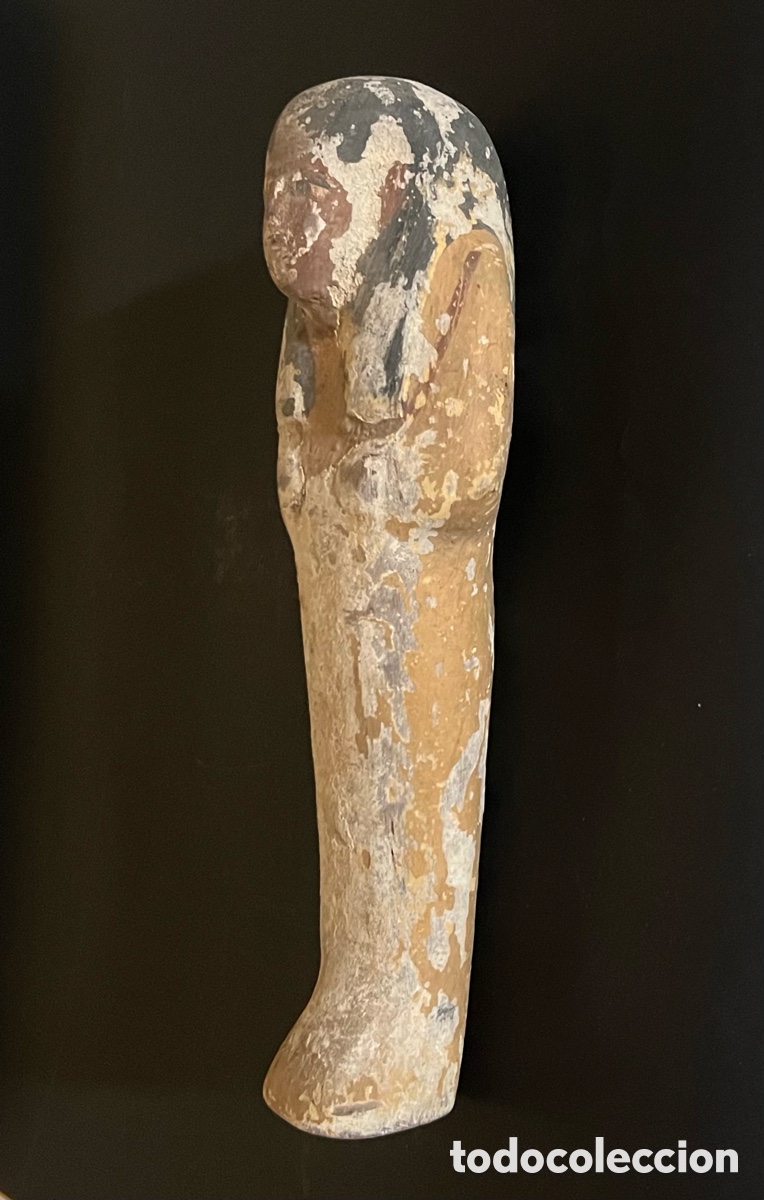
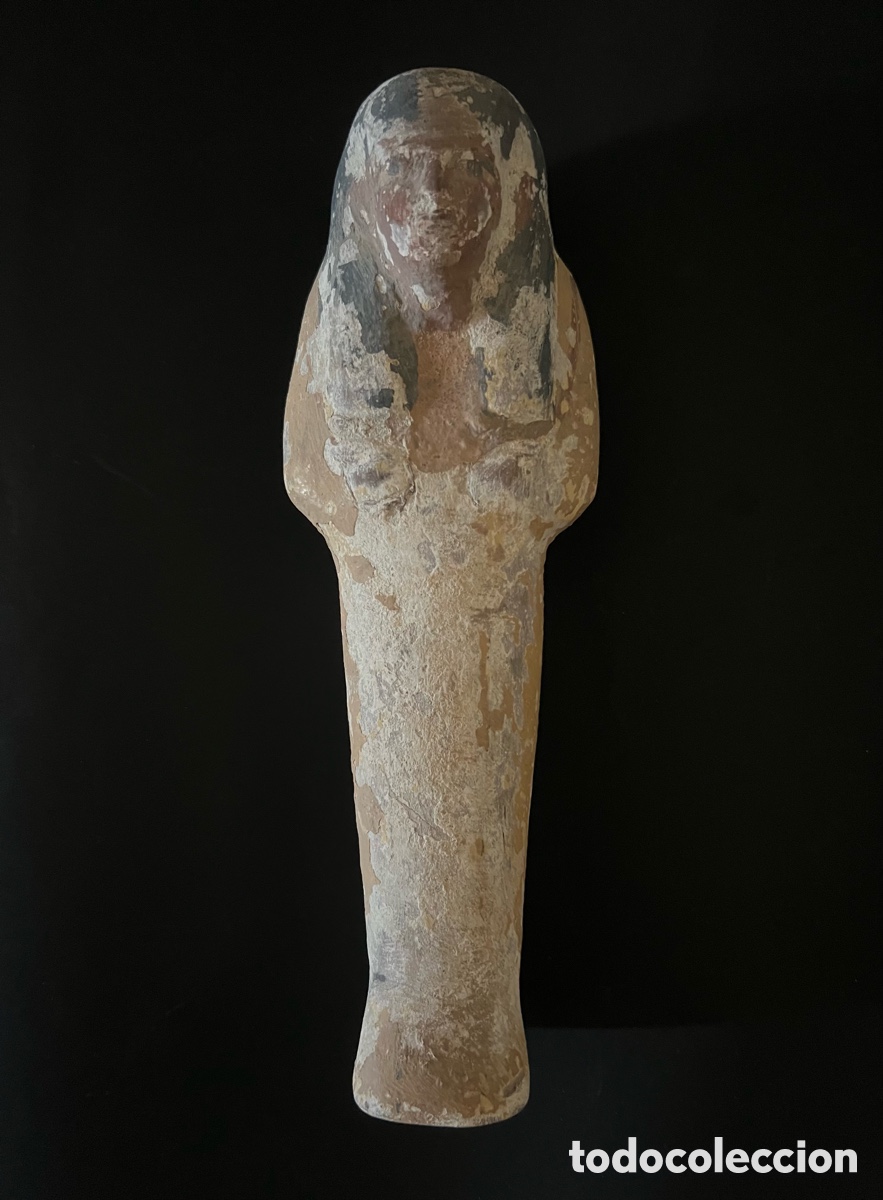
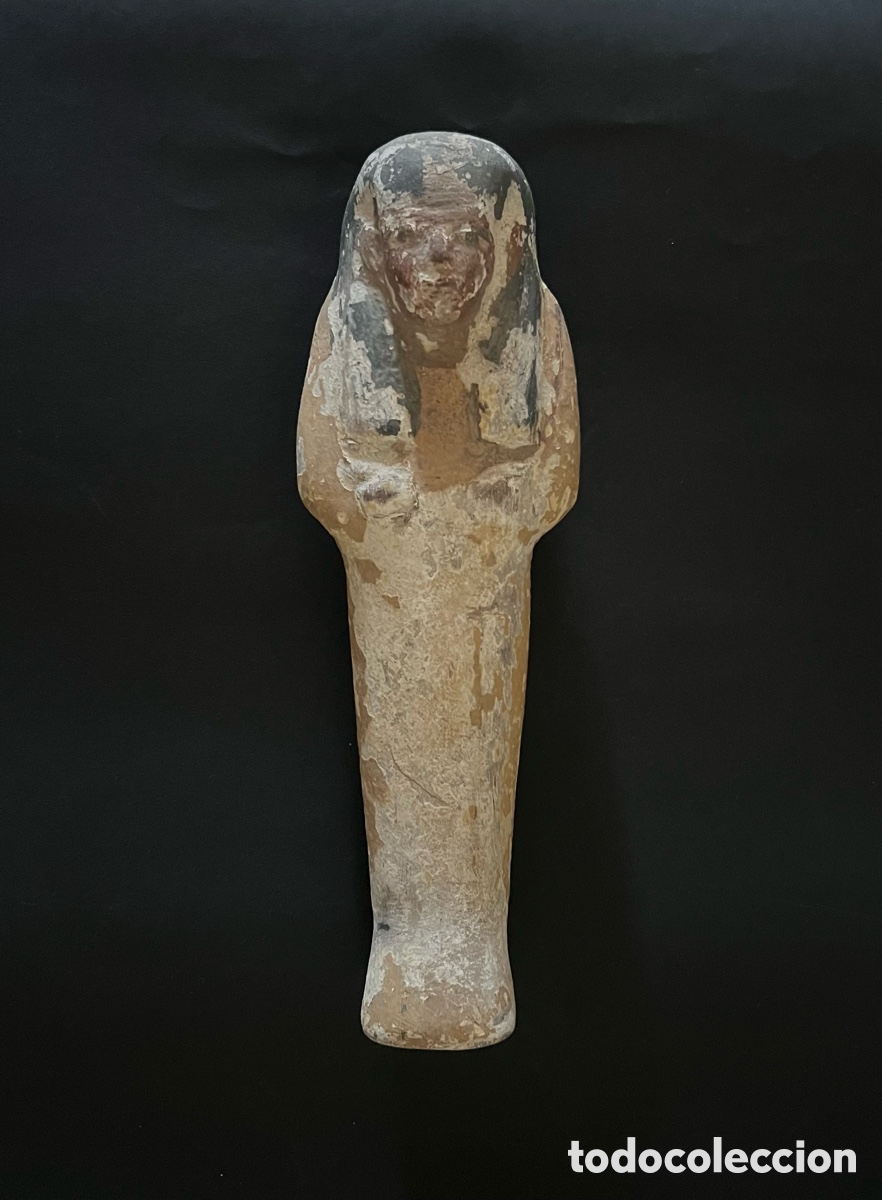
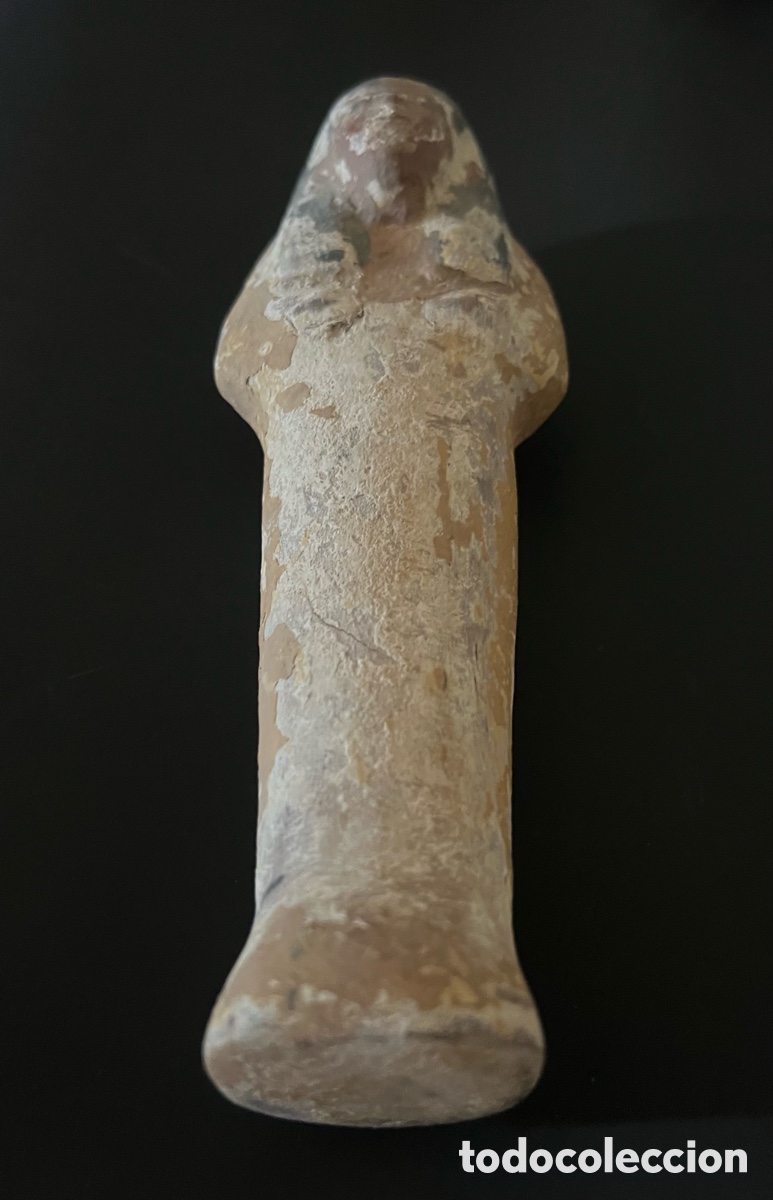
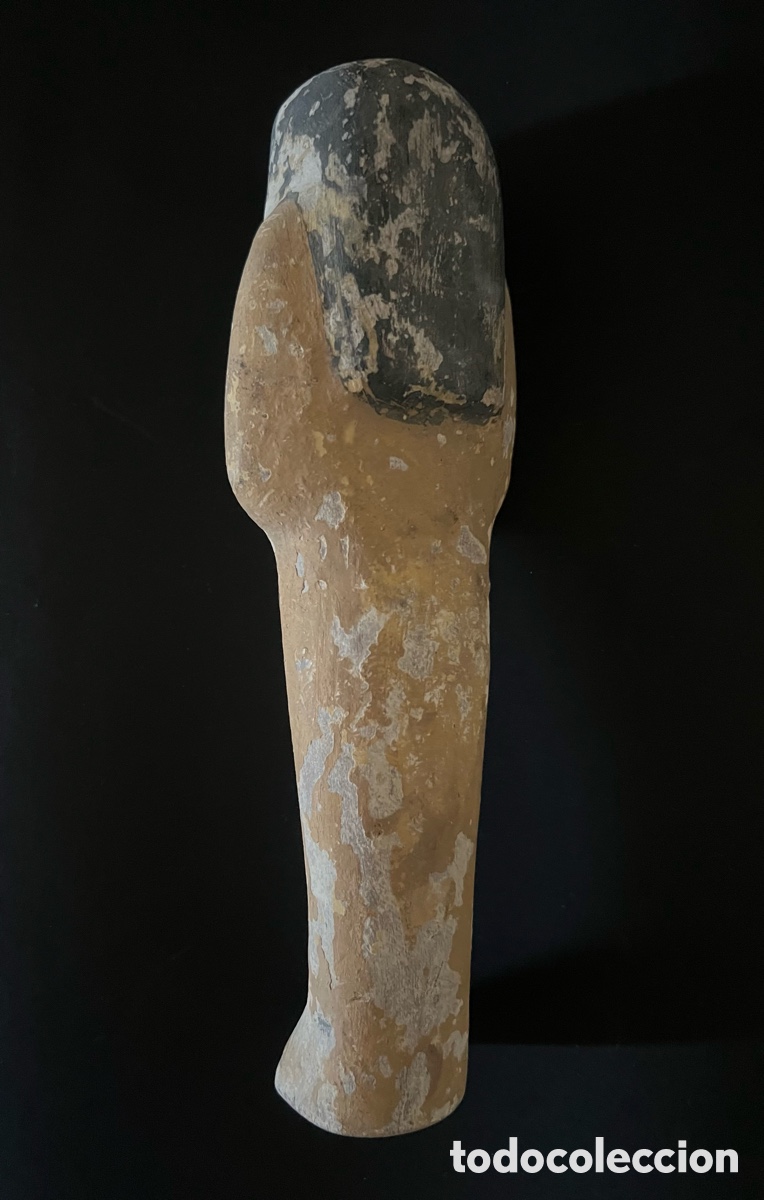
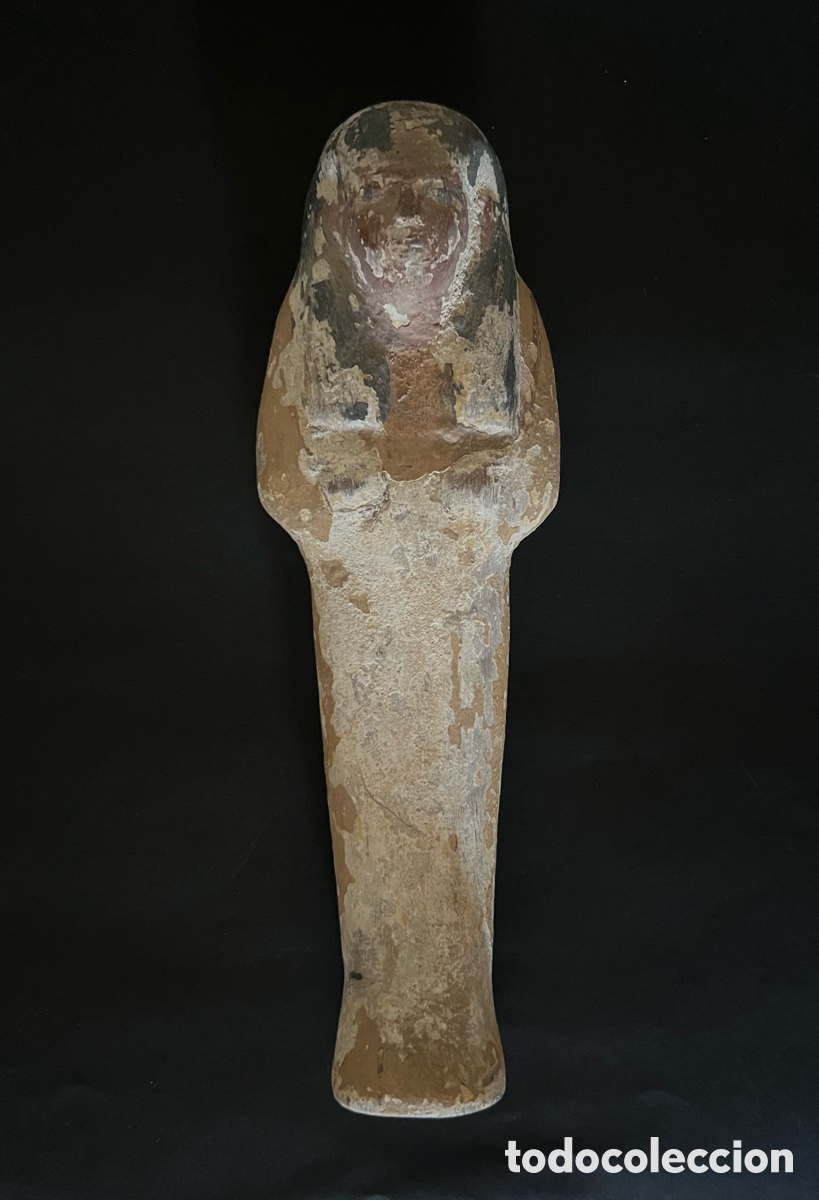
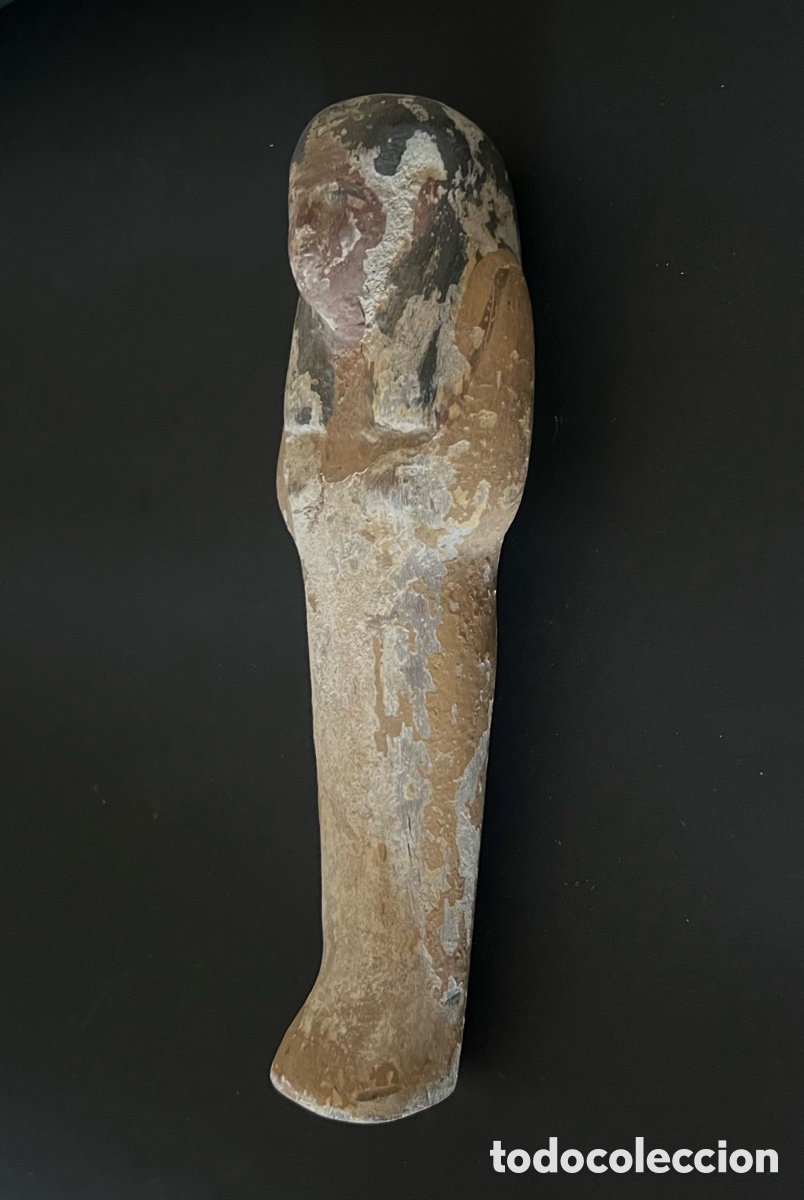
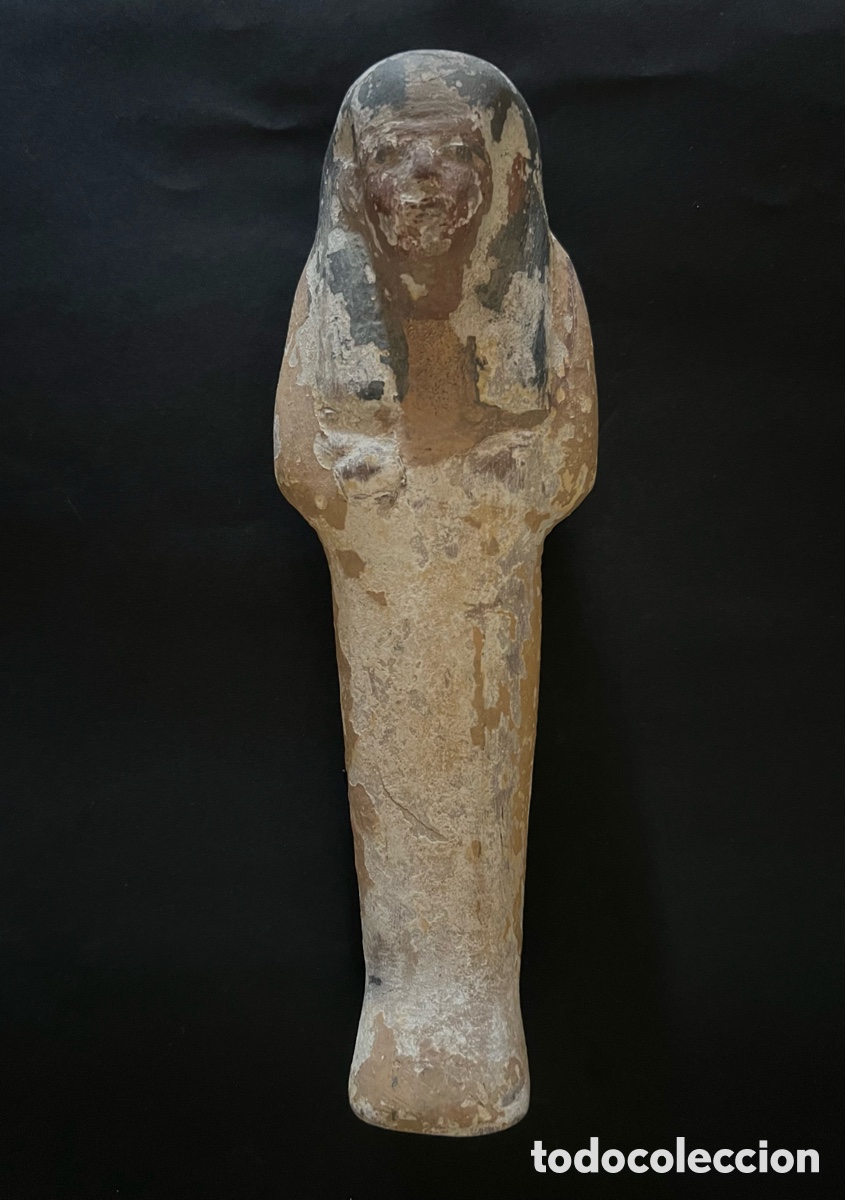
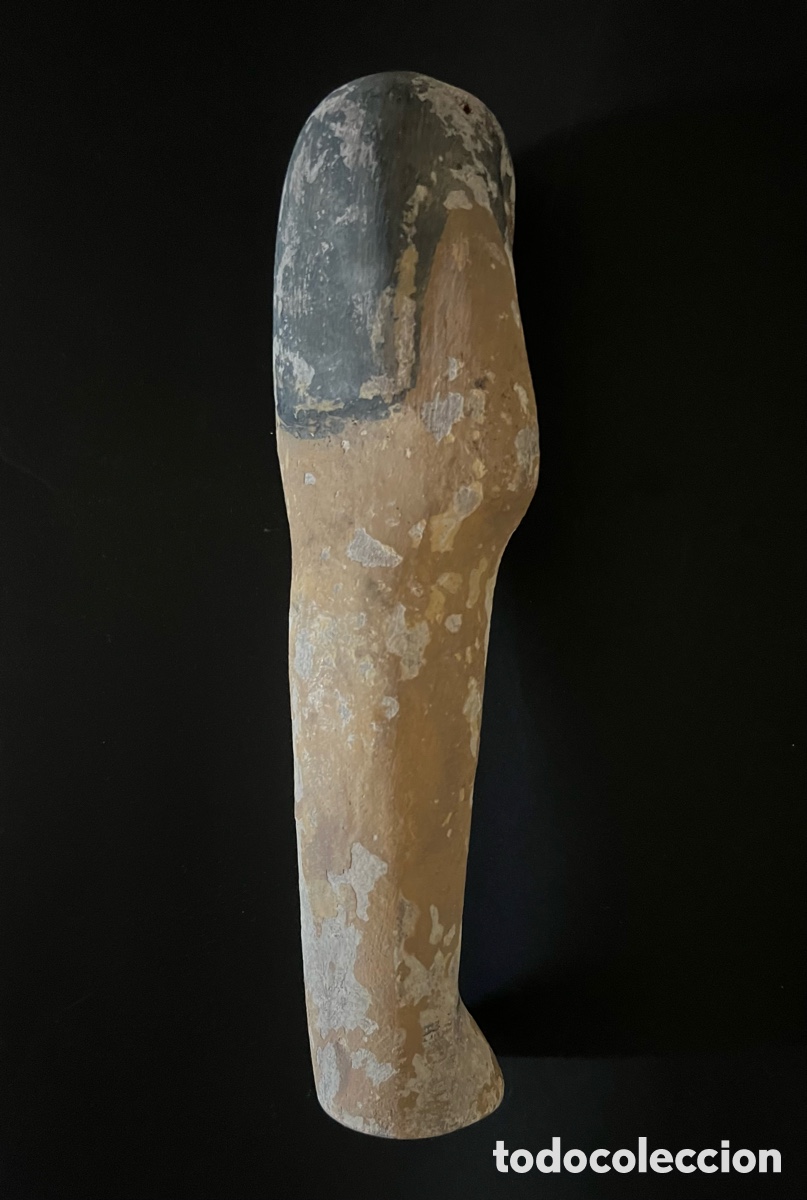
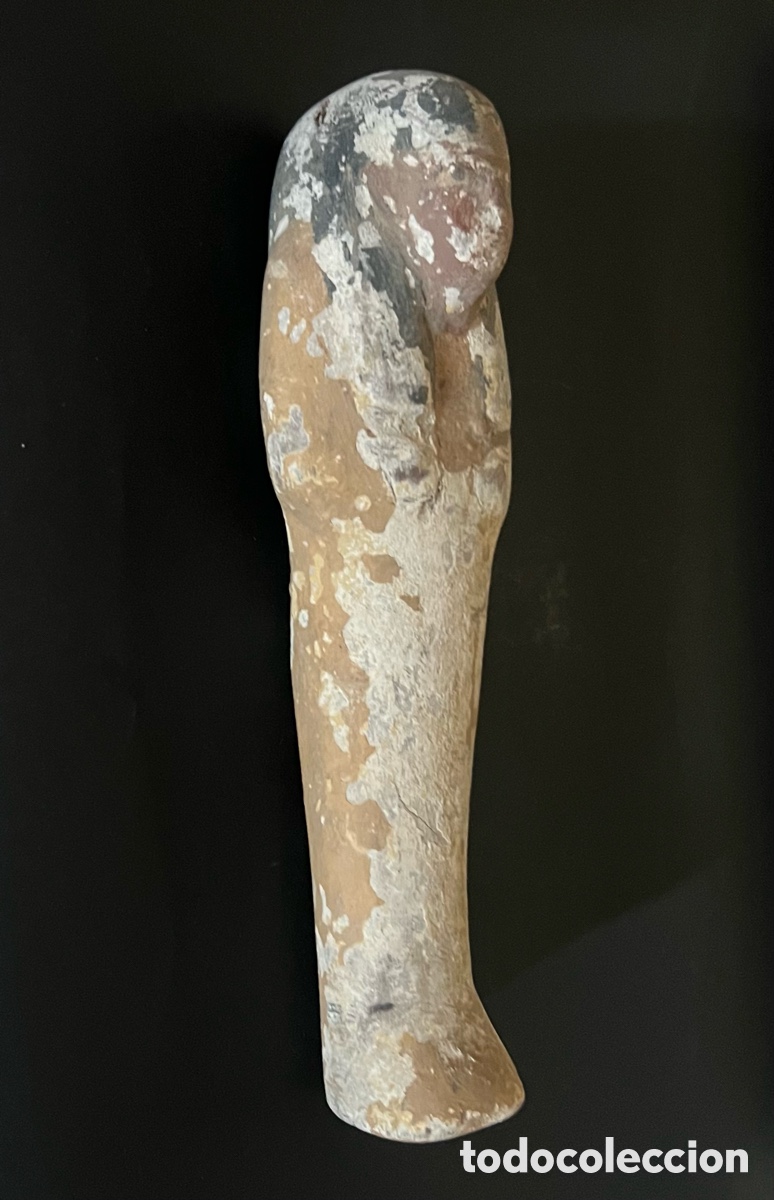
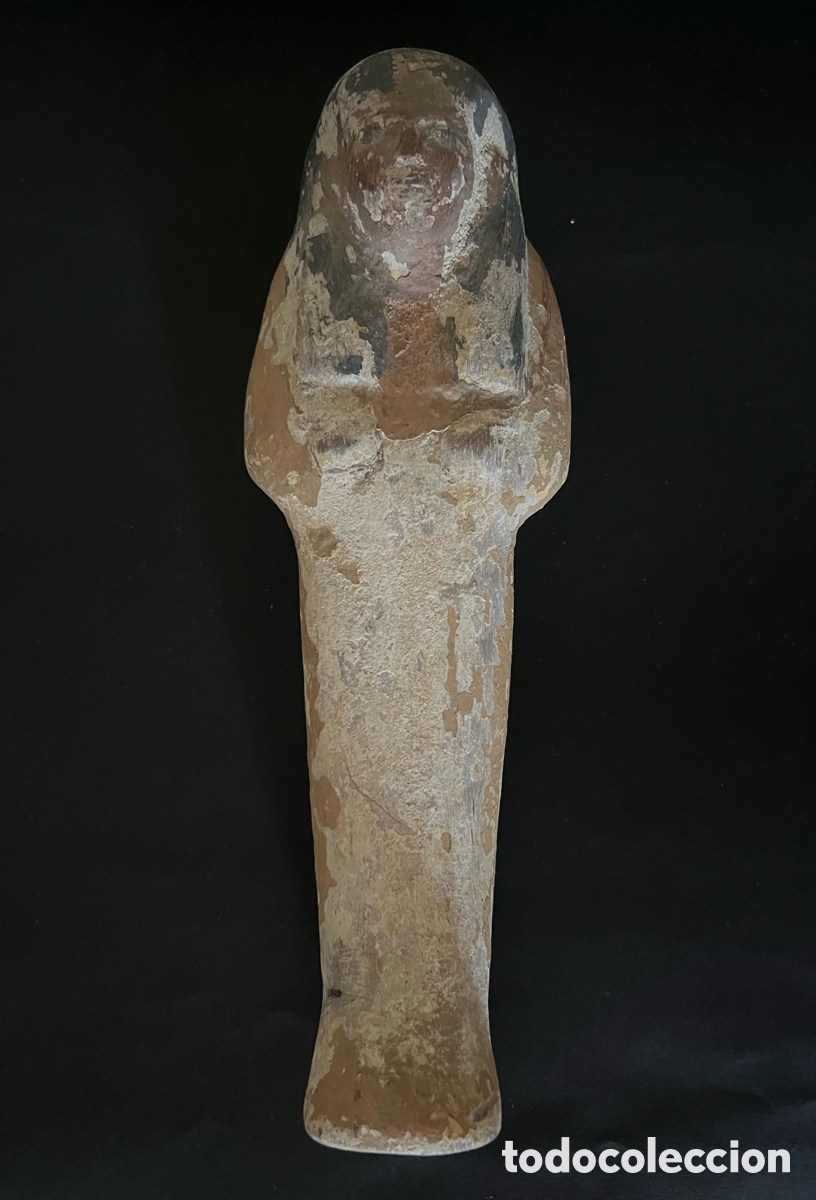
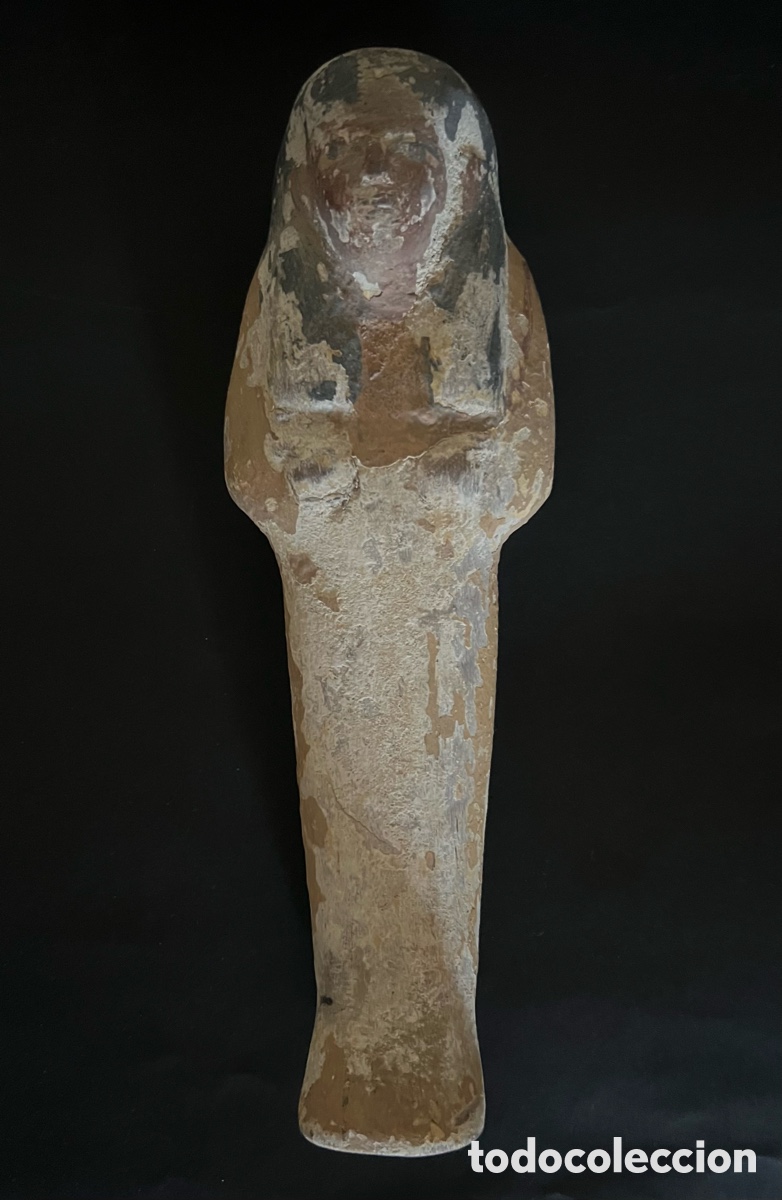
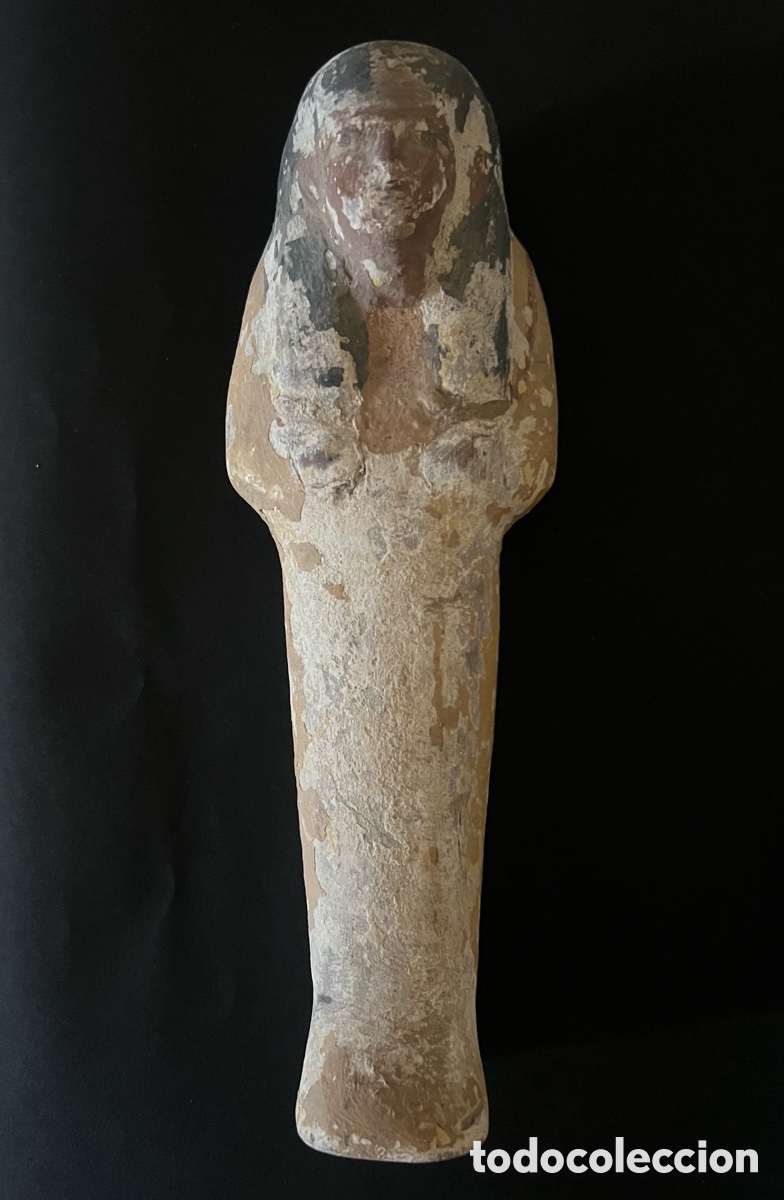
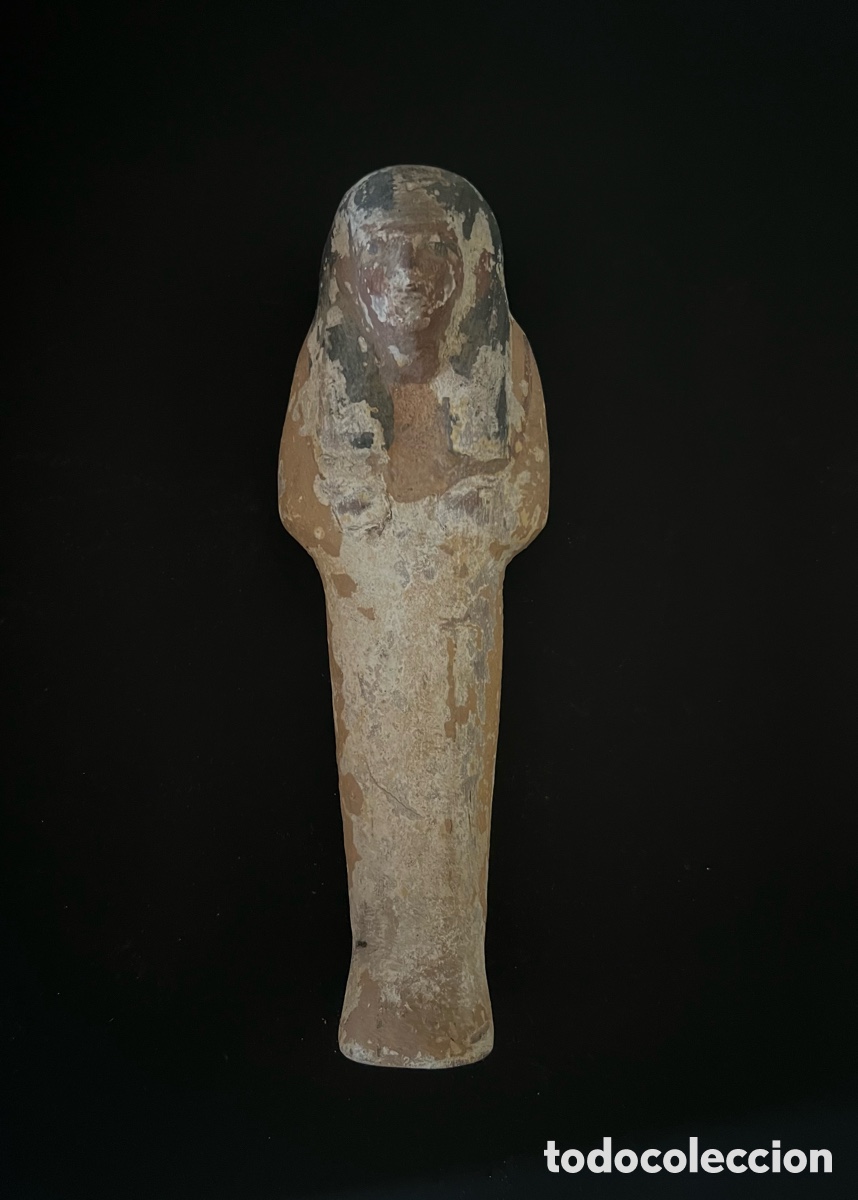
Wooden Ushabti
Medium: Polychrome wood
Ancient Egypt, Late Period
Dimensions: 26 x 9 x 7 cm
Weight: 265 grams
Private Collection
Ushebti is an Egyptian term meaning "those who answer," and they are small statues that, in Ancient Egypt, were placed in the tomb of the deceased. Most were made of faience, wood, or stone, although the most valuable were carved from lapis lazuli. Their purpose in Egyptian religion and mythology was to serve the deceased in Aaru (the Paradise of Egyptian mythology), as the Egyptians believed that these statuettes would work for them in the afterlife.
They were mummiform figures, in the image of the deceased, carrying a hoe and, sometimes, a sack on their back. In the Middle Kingdom, they bore the inscription of incantation 472 from the Coffin Texts. During the New Kingdom, the front of the ushabtis bore Chapter VI of the Book of the Dead, which, when recited, "endowed them with life" so they could work in place of the deceased.
The number of ushabtis placed in tombs varied according to the era and the importance of the deceased. Some New Kingdom burials contained 365 ushabtis, or more, corresponding to each day of the year; more than four hundred were found in the tomb of Pharaoh Tutankhamun, more than seven hundred in that of Seti I, and more than a thousand in that of Taharqo.
Ushabti de madera
Medium: madera policromada
Egipto antiguo, Baja época
Medidas: 26 X 9 X 7 cm.
Peso: 265 gramos
Colección privada
Ushebti es un término egipcio que significa «los que responden» y son pequeñas estatuas que, en el Antiguo Egipto, se depositaban en la tumba del difunto. La mayoría estaban hechas de fayenza, madera o piedra aunque los más valiosos estaban tallados en lapislázuli. Su cometido en la religión y mitología egipcia era servirle al difunto en el Aaru (el Paraíso de la mitología egipcia), ya que los egipcios pensaban que estas estatuillas trabajarían para ellos en la otra vida.
Eran figuras momiformes, a imagen del difunto, portando una azada y, a veces, un saco a la espalda. En el Imperio Medio llevaban inscrito el ensalmo 472 de los Textos de los Sarcófagos; durante el Imperio Nuevo, en la parte delantera tenían escrito el capítulo VI del Libro de los Muertos que, recitándolo, "les dotaba de vida" y así podían trabajar en lugar del difunto.
El número de ushebtis depositados en las tumbas varió según la época e importancia del personaje. Algunos enterramientos del Imperio Nuevo poseían 365 ushebtis, o más, correspondientes a cada día del año; se encontraron más de cuatrocientos en la tumba del faraón Tutankhamon, en la de Sethy I más de setecientos, y en la de Taharqo más de un millar.

Spagna (Málaga)


 Español
 English
 Deutsch
 Français
 Português
 Italiano